
It usually starts with something very small.
A cancelled dinner.
A postponed vacation.
A casual sentence like, “Let’s ask my parents first.”
You smile. You adjust. You tell yourself, “It’s okay.”
But slowly, that “okay” turns into irritation.
Irritation turns into overthinking.
Overthinking turns into fear.
And fear quietly becomes emotional trauma.
As a Govt.Recognized Counsellor & Mind Healer, I often joke (with a bit of pain):
“Marriage doesn’t break in big fights. It breaks in small adjustments that never get acknowledged.”
When family always comes first, marriage doesn’t end suddenly.
It suffers silently.
And silence, emotionally, is the loudest cry for help.
also read: 7 reasons women stay silent when emotionally hurt?
Make the Problem Personal – What People Actually Feel

Most partners don’t say, “My spouse is hurting me.”
They say things like:
Inside, though, their mind keeps whispering:
Many wives (and some husbands too) feel emotionally abandoned, even while being physically present.
They cook together, sleep in the same bed, attend functions together — but emotionally, they feel alone.
In Hinglish, clients often tell me:
“Sab kuch hai, par sukoon nahi hai.”
That lack of sukoon slowly eats away confidence, self-worth, and emotional safety.
also read: why so many people struggle with hyperindependence trauma?

Here are common psychological and emotional signs I observe in therapy:
Emotional Signs
Behavioral Signs
Relationship Signs
If you nodded while reading this, please pause and breathe.
Your reaction is valid.
also read: why a wifes higher income triggers emotionaldistance in men?
From a clinical lens, this pattern often overlaps with several psychological frameworks:
When ongoing family stressors cause emotional or behavioral symptoms like anxiety, depression, or irritability that feel overwhelming and persistent.
Relational Problems (DSM-5 V Codes)
This includes partner relational problems, where emotional neglect and loyalty conflicts disrupt mental health.
Chronic Stress Response (ICD-11)
Repeated emotional invalidation can activate the nervous system into a fight-flight-freeze mode, leading to long-term emotional exhaustion.
Attachment Theory
Many spouses stuck between family and partner struggle with:
In simple words:
The nervous system is confused about where safety truly lies.
also read: how money insecurity quietly damages intimacy?

Research strongly supports this experience:
One powerful finding:
Feeling like a secondary priority activates the same brain regions as physical pain.
So no, this is not “overthinking.”
This is neurology and psychology combined.
also read: why men avoid sharing problems with theirpartners?
Let me share a story (details changed for privacy).
A woman once sat across from me and said quietly,
“He loves me… but not enough to choose me.”
Every decision involved his family.
Her health scare? Delayed.
Her emotional breakdown? Ignored.
Her needs? Postponed.
She wasn’t angry.
She was tired.
Through therapy, she realized something powerful:
She wasn’t asking him to abandon his family.
She was asking to matter equally.
Healing began not with confrontation, but with clarity.
She learned to regulate her emotions, name her needs without guilt, and stop shrinking herself to fit others’ comfort.
That’s when the dynamic slowly shifted.
also read: what happens when wife earns more than husband?
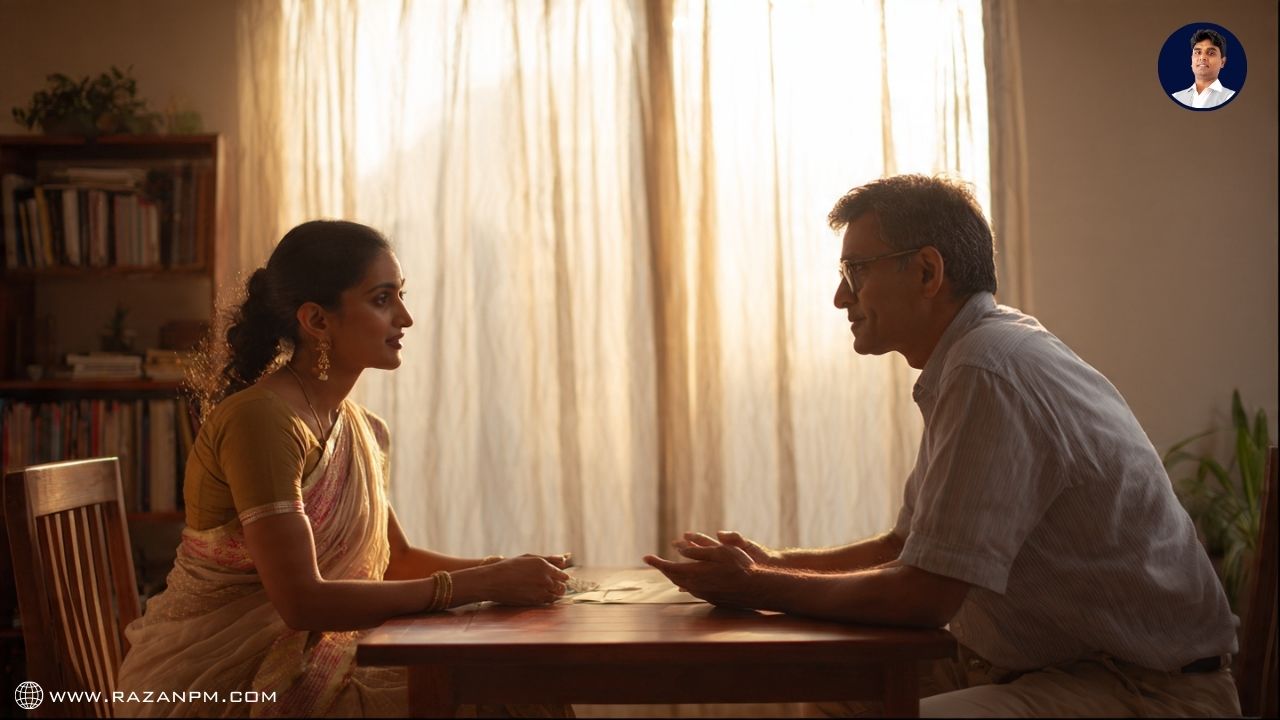
Here’s a simple but powerful exercise I give clients:
The Priority Awareness Exercise
Tonight, write answers to these three questions (honestly):
1. When was the last time my emotional need was chosen first?
2. What do I usually silence to keep peace?
3. If I continue this pattern for 5 years, how will I feel?
Now, share one sentence with your partner (not a lecture):
“I don’t want to compete with your family.
I just want to feel emotionally safe with you.”
That’s it.
No blame. No accusations. Just truth.
also read: when effort goes unnoticed and slowly losesmeaning?
This mini step creates awareness — but deep patterns need deeper healing.
Because:
True change requires:
These are guided processes, not quick fixes.
also read: how small daily appreciationprevents emotional burnout?
If this blog feels uncomfortably familiar, please know this:
You don’t have to figure it out alone.
As a Govt.Recognized Counsellor & Mind Healer, I work with individuals and couples to:
If your heart is tired, that’s a sign — not a weakness.
“If this feels familiar, you don’t have to carry it alone.
You can book a 1:1 consultation here, whenever you feel ready.”
No pressure. Just support.
👉 Begin Your Journey with a 1 on 1 Consultation
👉 Begin Your Journey with a 1 on 1 Consultation

Many husbands are emotionally conditioned to prioritize family due to upbringing, guilt, or fear of conflict. This does not mean they do not love their wife, but it can cause emotional neglect in marriage if not addressed.
also read: how stress hormones affect romanticbonding?
Yes, emotional neglect in marriage is very common, especially when one partner constantly puts family first. Feeling unheard or unimportant can slowly affect mental health and self-worth.
also read: why stable emotions build strongerlong term relationships?
Family interference can create chronic stress, anxiety, and emotional burnout. Over time, it may lead to depression, low confidence, and attachment issues within the marriage.
also read: when professional success createsemotional distance?
Yes. When marriage repeatedly comes second, emotional distance grows. Without healthy boundaries, resentment and loneliness can weaken trust, intimacy, and emotional safety.
also read: how workplace burnout destroysromantic relationships?
Being treated as a lower priority can trigger anxiety, sadness, emotional numbness, and trauma responses. Psychologically, it activates the brain’s pain and threat systems.
also read: why families thrive when effort istruly acknowledged?
Use calm, honest communication instead of blame. Focus on how you feel rather than what the other person is doing wrong. For example, “I feel emotionally unsafe when my needs come last.”
also read: why feeling appreciated matters morethan being loved?
No. Tolerating emotional pain for peace can slowly harm mental health. A healthy marriage balances family love with spousal emotional well-being.
also read: how long working hours quietlyreduce intimacy in marriage?
If you feel emotionally exhausted, unheard, anxious, or stuck in the same pattern, professional psychological support can help you understand, heal, and rebuild boundaries.
also read: how mismatched work schedules createemotional distance?
Yes. Therapy helps individuals and couples regulate emotions, heal attachment wounds, improve communication, and create healthier family boundaries without guilt.
also read: why being together all day stillfeels lonely for couples?
Absolutely. With awareness, emotional safety, and guided support, many couples successfully rebuild trust, balance priorities, and strengthen their marriage.
also read: when work stress replaces emotionalconnection at home?