
It usually starts with something very small.
Like… “Did I forget to reply to that school WhatsApp group?”
Or “Why is the kitchen light still on?”
Or “What if everyone is upset with me and I don’t even know why?”
Sounds harmless, right?
But within seconds, that tiny thought snowballs into a full mental movie—
I’m irresponsible.
I’m failing everyone.
Something bad will happen.
And suddenly, you’re lying awake at 2:47 AM, heart racing, replaying conversations from five years ago, while the rest of the house sleeps peacefully.
As a Govt.Recognized Counsellor & Mind Healer, I see this every day.
As a woman, I feel this every day.
These are not random worries.
These are hidden responsibilities women handle without credit—the invisible mental and emotional labor no one talks about, yet everyone benefits from.
also read: marriage guilt every successful woman secretlyfeels?

Most women who sit across from me in therapy say the same thing in different words:
“I don’t know why I’m so tired.”
“I feel anxious for no clear reason.”
“I do everything, yet I feel invisible.”
“I’m always thinking… planning… worrying.”
This is mental load, emotional labor, and unpaid work women do daily—all rolled into one silent burden.
Women are often managing:
While ignoring their own.
Aur sabse painful part kya hota hai?
No one says thank you.
Because no one even sees it.
also read: why marriage stress hits womens mental healthhard?

Over time, these hidden responsibilities don’t stay hidden inside the mind. They start showing up in the body and behavior.
Common signs and symptoms include:
Many women tell me, “I’m not depressed, but I’m not okay either.”
That “in-between” space is where chronic emotional labor lives.
also read: when marriage suffers because family always comesfirst?
From a clinical lens, this invisible workload doesn’t appear as a single diagnosis—but it contributes to several recognized psychological conditions.
DSM-5 Perspective
According to the DSM-5, prolonged emotional stress and role overload can contribute to:
These conditions often develop when a person feels constantly responsible yet powerless to change their situation.
ICD-11 Perspective
What’s important here is this:
Women are not “overreacting.”
Their nervous system is responding to chronic invisible stress.
also read: 7 reasons women stay silent when emotionally hurt?
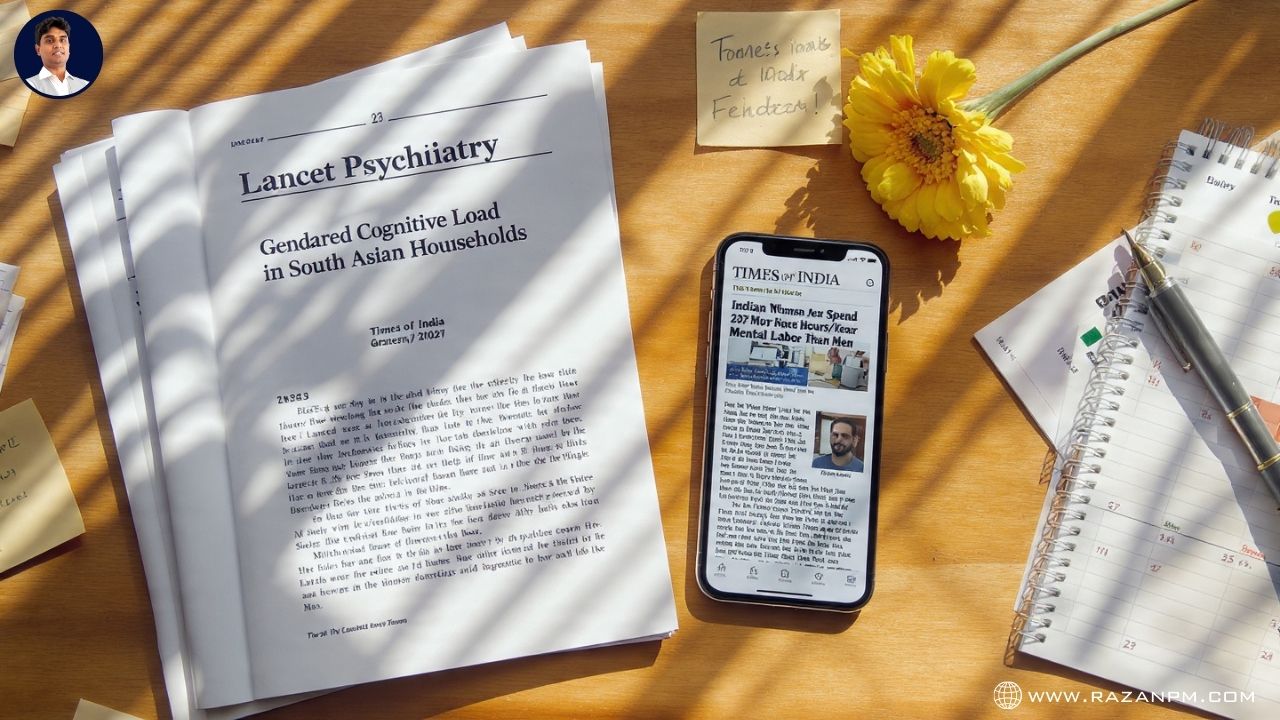
Research strongly supports what women already know in their bones.
Yet this labor remains unpaid, unacknowledged, and normalized.
also read: why so many people struggle with hyperindependence trauma?
I remember a client—let’s call her Ananya.
She was a working mother, caregiver to aging parents, emotional anchor of her marriage.
On paper, she was “doing fine.”
One day, she broke down over something small.
Her husband forgot to buy milk.
She cried for 40 minutes.
Not because of milk.
But because she realized—no one notices how much I carry.
That moment was her awakening.
And honestly? It was mine too.
The solution didn’t come from doing more.
It came from seeing, naming, and validating the invisible work.
Healing began when she stopped gaslighting herself.
also read: why a wifes higher income triggers emotionaldistance in men?
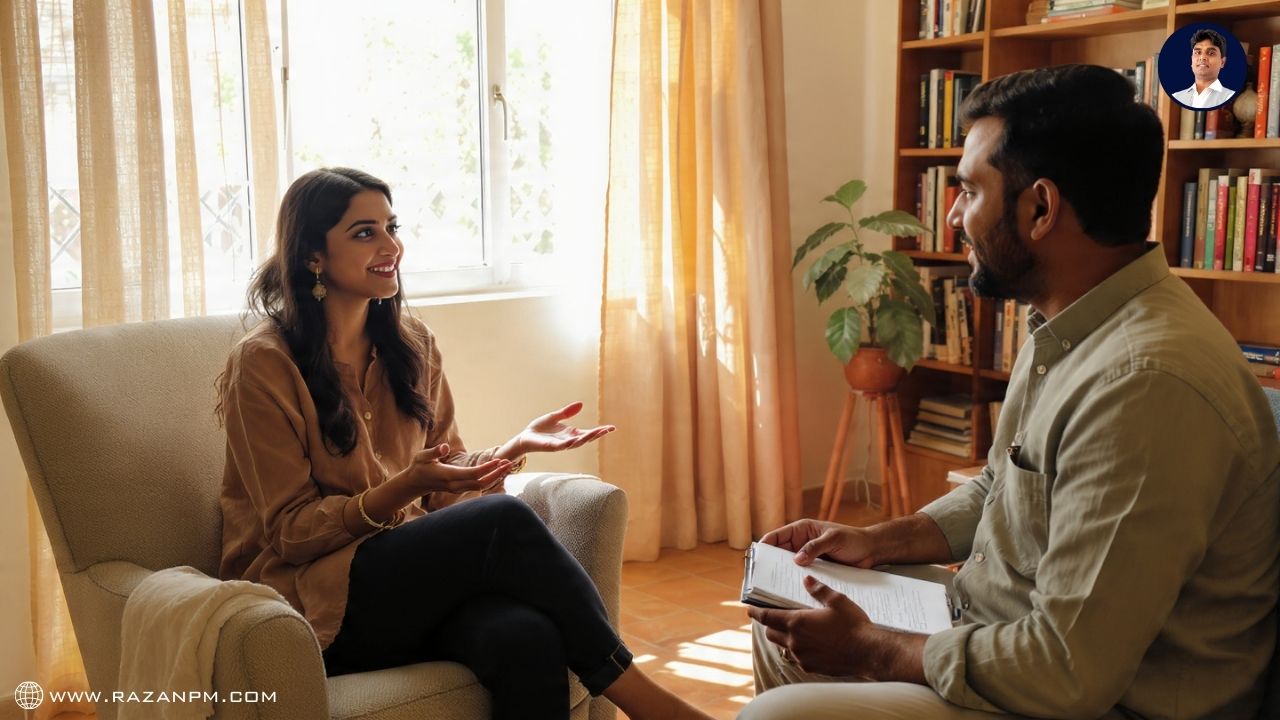
Here’s a simple but powerful exercise I give my clients:
Take a notebook. Set a timer for 10 minutes.
Write down:
No filtering. No judging.
Then circle the tasks no one has ever thanked you for.
Just seeing this list can reduce emotional pressure.
Because what is named… no longer controls you silently.
Yeh chhota step hai, but powerful hai.
also read: how money insecurity quietly damages intimacy?
This exercise helps you see the problem.
But it doesn’t fully:
Those need guided psychological work, emotional safety, and personalized strategies.
Blogs can open the door.
Healing happens when someone walks with you through it.
If this blog felt like it was written for you—
If something inside whispered “This is me”—
Please know this:
You are not weak.
You are not dramatic.
You are not imagining it.
You’ve just been carrying too much, for too long, without credit.
If this feels familiar, you don’t have to figure it out alone.
I offer gentle, confidential 1:1 psychological consultations designed for women who feel emotionally exhausted but unheard.
Book your consultation here and let’s unpack this together—slowly, safely, and without judgment.
👉 Begin Your Journey with a 1 on 1 Consultation
👉 Begin Your Journey with a 1 on 1 Consultation

Hidden responsibilities include emotional labor, mental load, and unpaid work women do to manage family emotions, planning, caregiving, and relationship harmony—often without recognition.
also read: why men avoid sharing problems with theirpartners?
Women feel emotionally exhausted because they constantly manage invisible mental tasks and emotional responsibilities, leading to chronic stress and burnout over time.
also read: what happens when wife earns more than husband?
Emotional labor is the unseen effort of managing others’ feelings and expectations. Women are socially conditioned to take on this role, increasing emotional fatigue and anxiety.
also read: when effort goes unnoticed and slowly losesmeaning?
Invisible mental load can cause anxiety, sleep issues, irritability, guilt, and emotional numbness, eventually contributing to depression and stress-related disorders.
also read: how small daily appreciationprevents emotional burnout?
Yes. Emotional burnout is recognized in psychological frameworks like ICD-11 and is linked to prolonged emotional stress and lack of support or validation.
also read: how stress hormones affect romanticbonding?
Long-term emotional labor can dysregulate the nervous system, increasing the risk of generalized anxiety disorder, adjustment disorders, and depressive symptoms.
also read: why stable emotions build strongerlong term relationships?
Women can begin by identifying invisible responsibilities, setting emotional boundaries, sharing mental load, and seeking psychological support for deeper healing.
also read: when professional success createsemotional distance?
Guilt during rest often comes from internalized beliefs that a woman’s value lies in caregiving and emotional availability, making rest feel undeserved.
also read: how workplace burnout destroysromantic relationships?
Women should seek help when emotional exhaustion, anxiety, or overwhelm starts affecting sleep, relationships, self-worth, or daily functioning.
also read: why families thrive when effort istruly acknowledged?
Therapy helps women validate their emotional experiences, heal people-pleasing patterns, regulate stress responses, and reclaim emotional balance safely.
also read: why feeling appreciated matters morethan being loved?