It usually starts very innocently.
You’re scrolling LinkedIn at midnight (because obviously, that’s the best time for career clarity), and suddenly you see a post:
“AI replaced our entire content team in 3 weeks.”
You laugh nervously.
Then you google: “Will AI replace my job?”
Then you open YouTube.
Then your chest feels tight.
Then your brain says:
“Bas… I’m next.”
Funny thing is—five minutes ago, you were only worried about tomorrow’s lunch.
Now you’re questioning your entire existence, career, self-worth, and future.
As a Govt.Recognized Counsellor, I see this every single day.
As a mind healer, I can tell you—this fear is not really about AI.
It’s about feeling replaceable.
also read: why gen z feels pressure to recordevery moment

Most people don’t say,
“I’m afraid of Artificial Intelligence.”
They say:
“I feel stuck.”
“I don’t feel valuable anymore.”
“What if I become irrelevant?”
“I worked so hard… and still feel unsafe.”
Deep inside, the thought is painful:
👉 “If a machine can do what I do… what am I worth?”
I hear this from:
The fear of being replaceable in the AI job era doesn’t just attack careers—it attacks identity.
Aur jab identity hilti hai na… anxiety automatically aa jaati hai.
also read: why every argument feels like apersonal attack

This fear rarely announces itself loudly.
It shows up quietly, daily, emotionally.
Common Psychological & Emotional Signs:
Behavioral Signs:
This is not laziness.
This is threat perception.
also read: how emotional isolation triggersschizophrenia like symptoms?
Let’s talk psychology, simply.
While “AI anxiety” is not a formal diagnosis yet, clinically we see it overlap with:
According to DSM-5:
The brain processes AI as a threat to survival, not logic.
Your nervous system doesn’t care if the threat is real or hypothetical.
It only asks one question:
“Am I safe?”
also read: why many wives experience silentdepression in marriage?
Let me normalize this with science.
Research Findings:
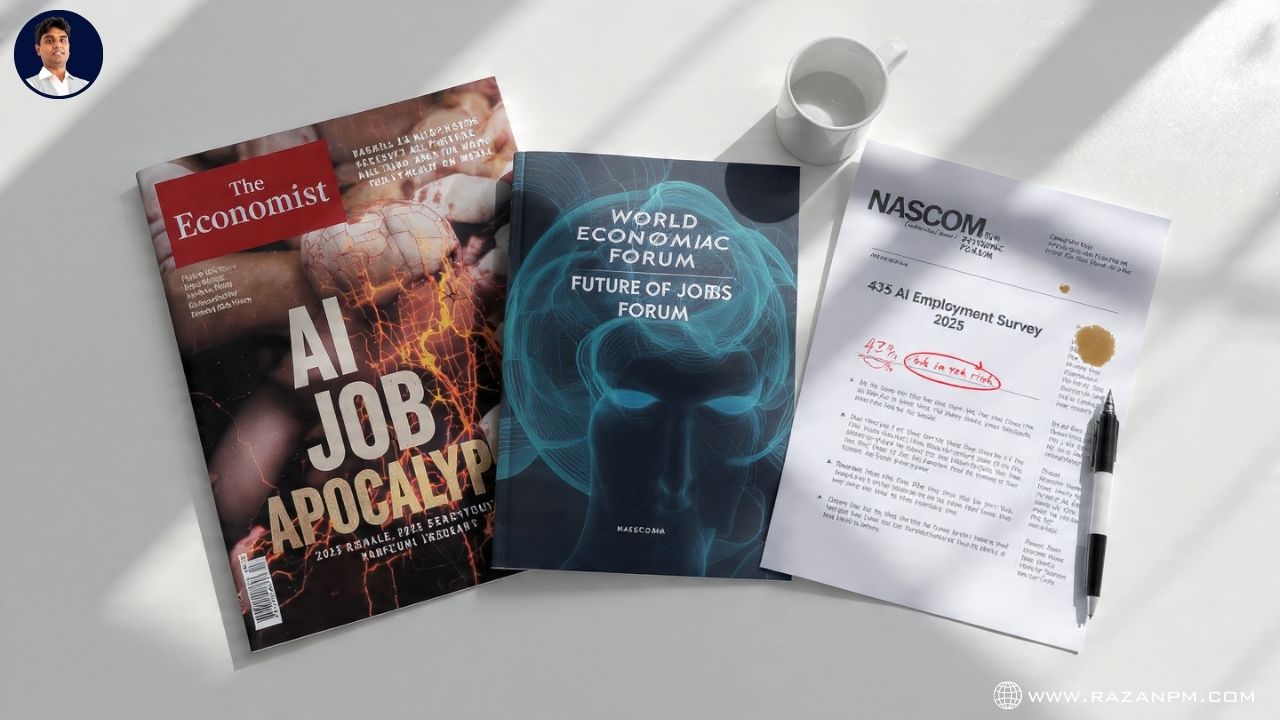
1. A 2023 World Economic Forum report stated that while AI will create jobs, it will also displace millions, increasing psychological job insecurity.
2. Studies in Journal of Applied Psychology show that perceived job insecurity leads to:
3. Neuroscience research confirms uncertainty activates the amygdala, the fear center of the brain.
So if your heart races thinking about AI…
You’re not weak.
You’re human.
also read: how gen z confuses trauma bondingwith real love?
Let me tell you about Rohan (name changed).
Rohan was a 34-year-old software professional.
Smart. Skilled. Responsible.
But every session, he said one line:
“I feel outdated.”
He had started believing:
One day, he broke down and said:
“I don’t fear losing my job… I fear losing my value.”
That moment changed everything.
We stopped focusing on AI
And started working on self-worth beyond performance.
Slowly, he realized:
AI can replace tasks.
It cannot replace human intuition, emotional intelligence, creativity, and meaning.
The fear reduced—not because AI disappeared,
But because his identity expanded.
also read: how over loyalty is quietly breakinggen z?

Here’s a simple but powerful exercise I give my clients:
🧠 The “Replaceability Reality Check” Exercise
Take a notebook. Write two columns.
Column A: What AI Can Do
Column B: What I Bring
Now read Column B slowly.
Your brain needs visual proof that you are more than a task list.
Do this for 7 days.
You’ll notice anxiety reducing—not magically, but neurologically.
also read: why gen z checks their phone whennothing is there?
Here’s the truth most blogs won’t tell you:
This fear is not about the future.
It’s about unresolved insecurity from the past.
AI just became the trigger.
Healing this requires:
These are guided processes, not motivational quotes.
also read: why loneliness hurts more when loveslowly fades?
If while reading this you felt:
Then please hear this:
👉 You are not broken.
👉 You are not replaceable.
👉 You are responding to uncertainty, not failing at life.
As a Govt.Recognized Counsellor & Mind Healer, I gently invite you:
If this fear feels familiar, you don’t have to figure it out alone.
A safe, supportive 1:1 space can help you reconnect with clarity and inner stability.
👉 [Book your 1:1 consultation here]
No pressure. No judgment.
Just understanding, healing, and grounded direction.
👉 Begin Your Journey with a 1 on 1 Consultation
👉 Begin Your Journey with a 1 on 1 Consultation

People fear being replaced by AI because automation creates uncertainty about job security. Psychologically, uncertainty activates the brain’s fear system, making people feel unsafe, undervalued, and replaceable—even before any real job loss happens.
also read: how constant rejection from apartner can trigger anxiety?
Yes. AI job anxiety is increasingly seen by psychologists as a form of career-related anxiety. While it’s not a formal diagnosis, it overlaps with generalized anxiety, adjustment disorders, and work-related stress recognized in DSM-5 and ICD-11.
also read: why women stay silent whenemotionally hurt?
Job insecurity caused by AI can lead to chronic stress, sleep problems, emotional burnout, low self-esteem, and constant overthinking about the future. Over time, it may increase the risk of anxiety and depressive symptoms.
also read: how friendship breakups impactmental health deeply?
Common symptoms include excessive worry about the future, comparison with AI tools, fear of becoming irrelevant, loss of motivation, irritability at work, late-night overthinking, and emotional exhaustion.
also read: how friends success triggersjealousy?
AI can replace repetitive tasks, but it cannot replace human qualities like emotional intelligence, ethical judgment, creativity, intuition, and meaningful human connection. Most experts agree AI will transform jobs, not completely eliminate human roles.
also read: why gen z is afraid of deepemotional love?
The fear feels personal because work is closely linked to identity and self-worth. When AI threatens jobs, the brain interprets it as a threat to survival and value, not just income—making the fear deeply emotional.
also read: why husbands support is crucial infamily disputes?
Start by separating your value from your job role. Practical steps include limiting doom-scrolling, focusing on adaptable skills, strengthening emotional intelligence, and practicing grounding techniques to calm the nervous system.
also read: when in laws never accept you and itstarts to hurt?
Yes. Career anxiety often connects to past experiences like failure, conditional self-worth, or fear of not being “enough.” AI often becomes the trigger that brings unresolved insecurities to the surface.
also read: why gen z avoids emotional conflict?
If fear of AI and job insecurity starts affecting your sleep, mental peace, relationships, or self-confidence, it’s a sign to seek professional support. Therapy can help reframe fear and rebuild emotional safety.
also read: gen z is shutting down emotionallyhere is why
Absolutely. Therapy helps regulate anxiety, challenge fear-based thinking, and rebuild identity beyond performance. With guided psychological support, people learn to feel secure even in uncertain job environments.
also read: how lack of validation from yourpartner triggers anxiety?
