
You check your phone.
No notification.
You keep it back.
Five seconds later… you check again.
Still nothing.
Suddenly your mind whispers, “What if someone messaged and I missed it?”
Then another thought, “Why is nobody texting me?”
Then the final blow, “Am I being ignored?”
And boom — a small action turns into overthinking, anxiety, and emotional discomfort.
Funny thing is, Gen Z laughs about it on memes.
But as a Gov.reg Counsellor and Mind Healer, I see the other side — compulsive phone checking slowly turning into mental exhaustion, fear of missing out, and emotional trauma.
also read: how friendship breakups impactmental health deeply?

Most Gen Z clients tell me things like:
In Hinglish bolun to —
Phone silent hota hai, par dimaag full volume pe chalta rehta hai.
This behavior isn’t about boredom.
It’s about validation, safety, connection, and emotional reassurance.
also read: how friends success triggersjealousy?

If you relate to these, pause and read slowly:
This is not laziness.
This is your nervous system asking for regulation.
also read: why gen z is afraid of deepemotional love?
Clinically speaking, compulsive phone checking is not a standalone diagnosis, but it overlaps with multiple psychological conditions described in DSM-5 and ICD-11.
From a clinical lens, it connects to:
1. Anxiety Disorders (DSM-5 / ICD-11)
The constant checking acts as a safety behavior to reduce anxiety temporarily.
2. Obsessive-Compulsive Spectrum
Not OCD exactly, but compulsive reassurance-seeking behavior.
3. Behavioral Addiction Patterns
Similar neural pathways as gambling or substance use — especially dopamine-driven loops.
4. Attachment Styles (Anxious Attachment)
Phone becomes a digital caregiver — checking equals emotional security.
In simple words:
Your brain is not addicted to the phone.
It’s addicted to how the phone makes you feel safe.
also read: why husbands support is crucial infamily disputes?
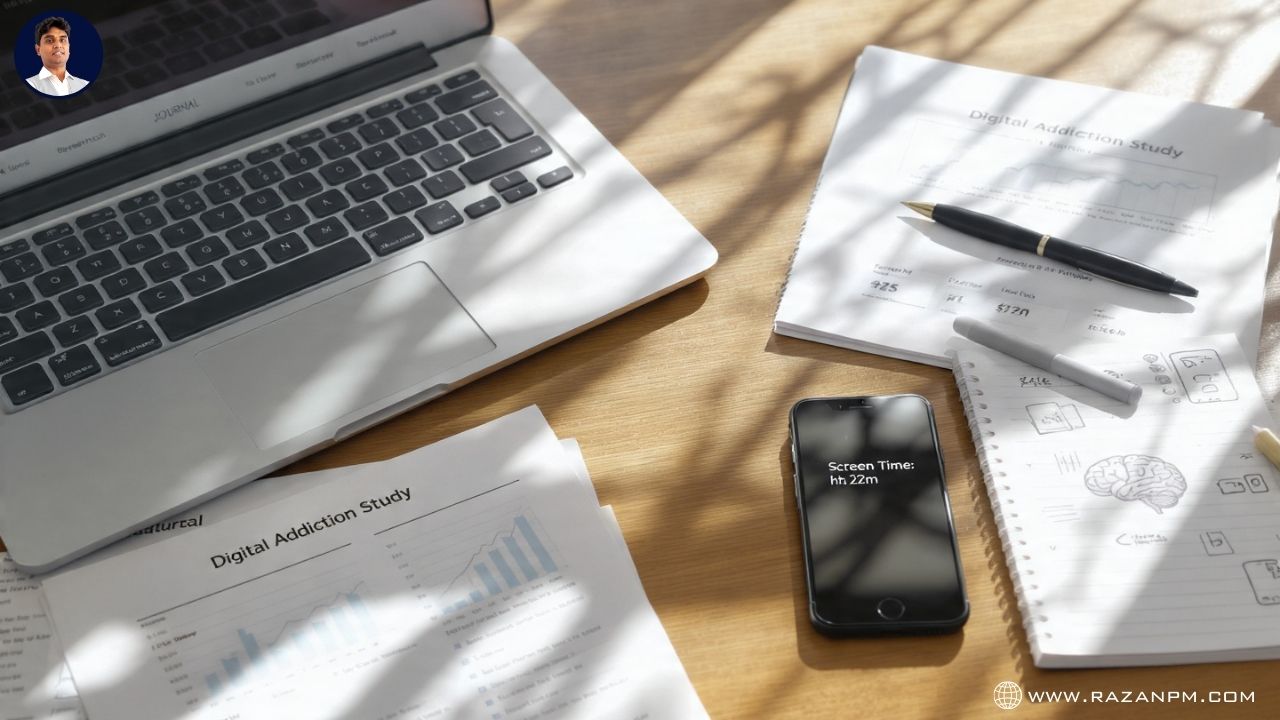
Multiple studies support this pattern:
Research published in Frontiers in Psychology shows excessive phone checking increases anxiety and stress hormones.
A 2022 study found Gen Z has lower tolerance for uncertainty, making them more prone to checking behaviors.
Dopamine spikes from notifications condition the brain to expect rewards, even when none exist.
That’s why your thumb opens apps automatically.
It’s not habit — it’s conditioning.
also read: when in laws never accept you and itstarts to hurt?
Let me share a real story.
A 21-year-old client came to me saying,
“Doctor, my phone controls my mood.”
She checked her phone every 2 minutes.
No message meant rejection.
No reply meant panic.
One day she said something that stayed with me:
“When my phone is quiet, it feels like I don’t exist.”
We didn’t start by reducing screen time.
We started by healing the fear underneath — the fear of being forgotten.
Slowly, as she learned emotional self-soothing,
her phone checking reduced naturally.
Because healing doesn’t start with control.
It starts with understanding.
also read: why gen z avoids emotional conflict?
Here’s a simple but powerful psychological tool you can try right now:
The 90-Second Pause Technique
Next time you feel the urge to check your phone:
1. Pause for 90 seconds
2. Place one hand on your chest
3. Ask yourself softly:
“What am I really looking for right now?”
4. Breathe slowly and name the emotion — anxiety, loneliness, boredom
Most urges fade within 60–90 seconds.
This trains your brain to respond, not react.
Small step, but deeply regulating.
also read: gen z is shutting down emotionallyhere is why

This mini solution helps — but let me be honest.
If compulsive phone checking is tied to:
Then surface tips won’t fully heal it.
True healing needs:
A blog can start awareness.
But transformation needs guidance.
also read: how lack of validation from yourpartner triggers anxiety?
If this blog felt like someone described you,
please know — nothing is wrong with you.
Your mind learned this behavior to protect you.
And unlearning is possible — gently, safely, at your pace.
If you feel ready, I’m here to support you.
If this feels familiar, you don’t have to figure it out alone.
Book your 1:1 consultation here — a space where you’ll be heard, not judged.
👉 Begin Your Journey with a 1 on 1 Consultation
👉 Begin Your Journey with a 1 on 1 Consultation

1. Why does Gen Z keep checking their phone constantly?
Gen Z often checks their phone due to anxiety, fear of missing out FOMO, dopamine dependency, and emotional reassurance seeking. Phone checking temporarily reduces stress but increases long-term anxiety.
also read: how to let go of a one sided love?
2. Is compulsive phone checking a mental disorder?
Compulsive phone checking is not a standalone disorder, but it is linked to anxiety disorders, behavioral addiction patterns, and obsessive reassurance-seeking behaviors described in DSM 5 and ICD 11.
also read: 5 common communication problemsafter marriage
3. What is phantom vibration syndrome?
Phantom vibration syndrome is the sensation of feeling phone vibrations or notifications when none exist. It is linked to heightened anxiety, dopamine conditioning, and excessive phone use.
also read: why anxiety turns into constantmuscle tension?
4. Why does phone silence cause anxiety?
Phone silence triggers uncertainty and fear of being ignored. For people with anxious attachment or emotional dependency, silence feels like rejection, leading to restlessness and overthinking.
also read: why google makes your health anxietyworse?
5. How does dopamine affect phone addiction?
Notifications release dopamine in the brain, creating a reward loop. Over time, the brain starts craving anticipation itself, which leads to frequent phone checking even without notifications.
also read: how fear of sickness is making youunwell?
6. How can I stop checking my phone all the time?
You can start by practicing pause techniques, emotional awareness, limiting safety-check behaviors, and regulating your nervous system instead of forcing strict screen time control.
also read: 7 signs you are stuck in a silentidentity crisis
7. Is phone addiction worse in Gen Z?
Yes, Gen Z is more vulnerable due to early exposure to smartphones, social media validation systems, and lower tolerance for uncertainty, making compulsive phone checking more common.
also read: hidden triggers behind gen z selfdoubt
8. Can compulsive phone checking affect mental health?
Yes, it can increase anxiety, stress, sleep problems, low self-esteem, emotional dependency, and difficulty focusing, especially when linked with social media use.
also read: why phobias trigger fast heartbeatand breathlessness?
9. When should someone seek professional help?
If phone checking controls your mood, increases anxiety, affects sleep, or makes you feel emotionally dependent, consulting a consultant can help address the root cause.
also read: why your husband feels emotionallycold and distant?
10. Can therapy really help with phone addiction?
Yes. Therapy helps identify emotional triggers, attachment patterns, anxiety responses, and teaches healthier coping strategies, leading to long-term behavioral change.
also read: how emotional distance makes a wifefeel invisible?