
It usually starts with something very small.
A message seen but not replied to.
A joke that hurt but was laughed off.
A “you’re overthinking” thrown casually like free advice.
At first, it feels silly to feel bad about it.
So women smile. Adjust. Ignore.
But inside, the mind goes into full Bollywood background music mode — negative thoughts, overanalysis, self-doubt, fear.
“Am I too sensitive?”
“Maybe it’s my fault.”
“I should not make a big issue.”
And slowly, emotional pain turns into emotional silence.
As a Gov.reg Counsellor and Mind Healer, I meet women every week who say the same sentence in different ways:
“I don’t know when I stopped talking about what hurts.”
That silence is not weakness.
It is a survival response.
also read: how friendship breakups impactmental health deeply?

Most women I work with are not silent because they have nothing to say.
They are silent because they have said it before — and it didn’t feel safe.
They feel:
Many women grow up learning that being emotional means being dramatic.
So they become experts at swallowing pain.
Outwardly, they function.
Inwardly, they carry unprocessed emotional trauma.
And yes, sometimes they joke about it too.
“Haan haan, main hi zyada sochti hoon.”
But pain doesn’t disappear when ignored.
It just goes underground.
also read: how friends success triggersjealousy?

Emotional silence often shows up quietly before it becomes loud.
Common signs include:
Clinically, these are red flags of emotional suppression, which is closely linked to anxiety, depression, and stress related disorders.
also read: why gen z is afraid of deepemotional love?
From a clinical lens, emotional silence is not a personality flaw.
It is a learned coping mechanism.
According to DSM-5, emotional suppression is commonly seen in:
The ICD-11 also recognizes emotional inhibition as part of:
When emotions are repeatedly invalidated, the brain learns one rule:
Silence equals safety.
The nervous system chooses freeze over fight.
also read: why husbands support is crucial infamily disputes?
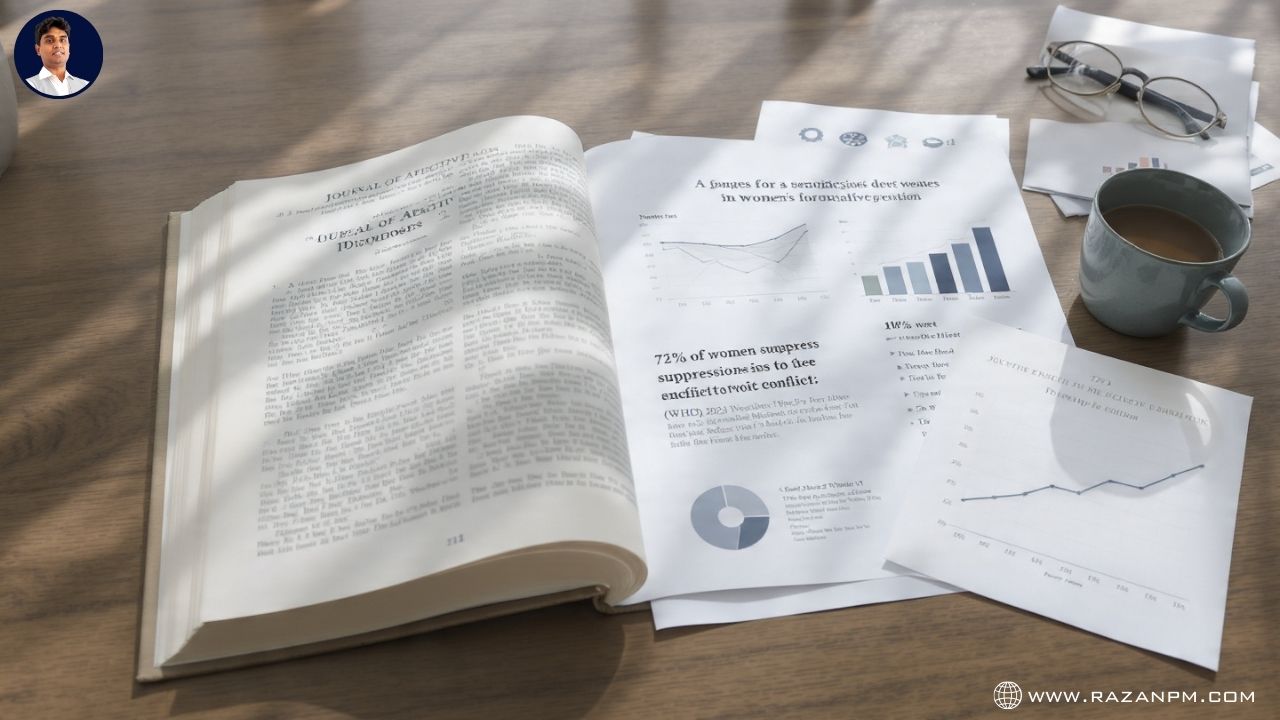
Research published in journals like Emotion and Journal of Clinical Psychology shows that:
One study found that women who suppress emotions report higher psychological distress than those who express emotions in safe environments.
Silence protects temporarily — but harms long term.
also read: when in laws never accept you and itstarts to hurt?
I remember a client, let’s call her Riya.
She was successful, independent, smiling in every photo.
But in therapy, she said softly:
“I don’t fight anymore. I just stop feeling.”
She had learned silence in childhood — when expressing hurt meant being scolded or ignored.
In one session, when I gently asked,
“What would happen if you spoke your truth?”
She cried and said,
“I’m scared I’ll lose people.”
That moment changed everything.
Healing didn’t begin with speaking loudly.
It began with feeling safely heard.
also read: why gen z avoids emotional conflict?

Here is a small but powerful exercise you can try right now:
The Two Sentence Release
1.. Write this sentence honestly:
“What hurt me today was ______.”
2. Then write:
“It made me feel ______.”
No explanation. No justification.
Just truth.
This helps your brain process emotions instead of storing them.
Do this daily for one week.
Small steps create emotional safety.
also read: gen z is shutting down emotionallyhere is why
But here’s the truth —
Journaling alone cannot heal deep emotional wounds.
Because silence is not just a habit.
It is tied to beliefs, past trauma, and nervous system patterns.
Breaking emotional silence requires:
This depth cannot be reached through a blog.
also read: how lack of validation from yourpartner triggers anxiety?
If this blog felt familiar…
If you recognized yourself in these words…
Please know this — you are not broken.
You learned silence to survive.
Now you can learn expression to heal.
As a Gov.reg Counsellor and Mind Healer, I gently support women in reconnecting with their emotional voice — safely, without judgment.
You don’t have to figure this out alone.
When you feel ready, you can book a 1:1 consultation and we will take this journey step by step, at your pace.
👉 Begin Your Journey with a 1 on 1 Consultation
👉 Begin Your Journey with a 1 on 1 Consultation

Women often stay silent due to fear of judgment, emotional invalidation, past trauma, and conditioning that teaches them to suppress feelings to maintain harmony and safety.
also read: how to let go of a one sided love?
Yes, emotional silence can be a sign of unresolved emotional trauma. When emotions are repeatedly dismissed, the mind learns silence as a protective coping mechanism.
also read: 5 common communication problemsafter marriage
Common signs include overthinking, emotional numbness, people pleasing, sudden mood changes, physical stress symptoms, and difficulty expressing needs.
also read: why anxiety turns into constantmuscle tension?
Emotional suppression increases stress hormones and is strongly linked to anxiety, depression, burnout, and psychosomatic health issues in women.
also read: why google makes your health anxietyworse?
Psychology explains emotional hiding as a learned survival response influenced by attachment styles, trauma history, and social conditioning, as recognized in DSM and ICD frameworks.
also read: how fear of sickness is making youunwell?
Yes, emotional silence creates emotional distance, misunderstandings, and unspoken resentment, which can weaken trust and emotional intimacy in relationships.
also read: 7 signs you are stuck in a silentidentity crisis
Women can begin by journaling, identifying emotional triggers, practicing boundary setting, and seeking emotionally safe spaces such as therapy or guided support.
also read: hidden triggers behind gen z selfdoubt
Yes, many women feel guilt due to societal expectations that label emotional expression as weakness or drama, especially when emotions were invalidated earlier in life.
also read: why phobias trigger fast heartbeatand breathlessness?
If emotional silence leads to anxiety, depression, emotional numbness, or physical symptoms, seeking support from a consultant can help process emotions safely.
also read: why your husband feels emotionallycold and distant?
Absolutely. Therapy helps women understand emotional patterns, heal trauma, and rebuild a healthy emotional voice in a supportive, non-judgmental environment.
also read: how emotional distance makes a wifefeel invisible?