
Let’s be honest — aaj kal ek chhoti si baat bhi Gen Z ko emotional rollercoaster pe chadha deti hai.
Missed a text?
Suddenly overthinking.
Partner ne “hmm” likh diya?
Bas, ab toh unko lagta hai breakup ho raha hai.
Last week, a client told me,
“Sir, my boyfriend replied ‘K’… I think he doesn’t love me anymore.”
And I had to smile gently — not at her pain, but at the emotional freeze mode she instantly slipped into.
Hum sab ne notice kiya hai — this generation is not exploding emotionally… they are shutting down.
Not crying.
Not reacting.
Just… numb.
And when emotions freeze, relationships freeze too. Partners start feeling ignored, unwanted, or “emotionally disconnected,” even when they still love each other deeply.
also read: why saying i love you is not enough?

If you're Gen Z, you may relate to this:
And partners often feel:
Emotional numbness is not coldness.
It’s exhaustion.
It’s overwhelm.
It’s the mind saying — “I have felt too much for too long. Now I can’t feel at all.”
also read: why emotional intimacy feels unsafefor some partners?

Here are the most common signs I see in therapy rooms:
✔ 1. Emotional Numbness
Feeling empty, dull, or detached from emotions.
✔ 2. Freeze Response During Conflict
Fight or flight nahi… directly freeze mode.
Silent. Blank. Shut down.
✔ 3. Difficulty Expressing Love or Hurt
Partners think you're being distant — but internally you’re overwhelmed.
✔ 4. Overthinking Followed by Disconnection
Too many thoughts → brain overload → emotional switch off.
✔ 5. Avoiding Conversations
Especially when they involve vulnerability.
✔ 6. Feeling Tired by People
Even the ones you love.
✔ 7. Partners Feeling Unseen or Unheard
Because emotional availability drops.
also read: how hormonal shifts can triggerdepression?
From a clinical psychology lens, Gen Z emotional shutdown overlaps with:
🔹 Depersonalization / Derealization Symptoms (DSM-5)
The DSM-5 notes that individuals may feel:
Gen Z often describes this as:
“I feel like I’m watching my life, not living it.”
🔹 Stress-Related Dissociation (ICD-11)
ICD-11 recognizes emotional blunting as a coping mechanism during:
This is not “being dramatic.”
This is your brain going into protection mode.
🔹 Freeze Response in Trauma Theory
The nervous system enters a shutdown state when:
This freeze response is extremely common in Gen Z due to:
also read: how chronic pain fuels depression atany age?
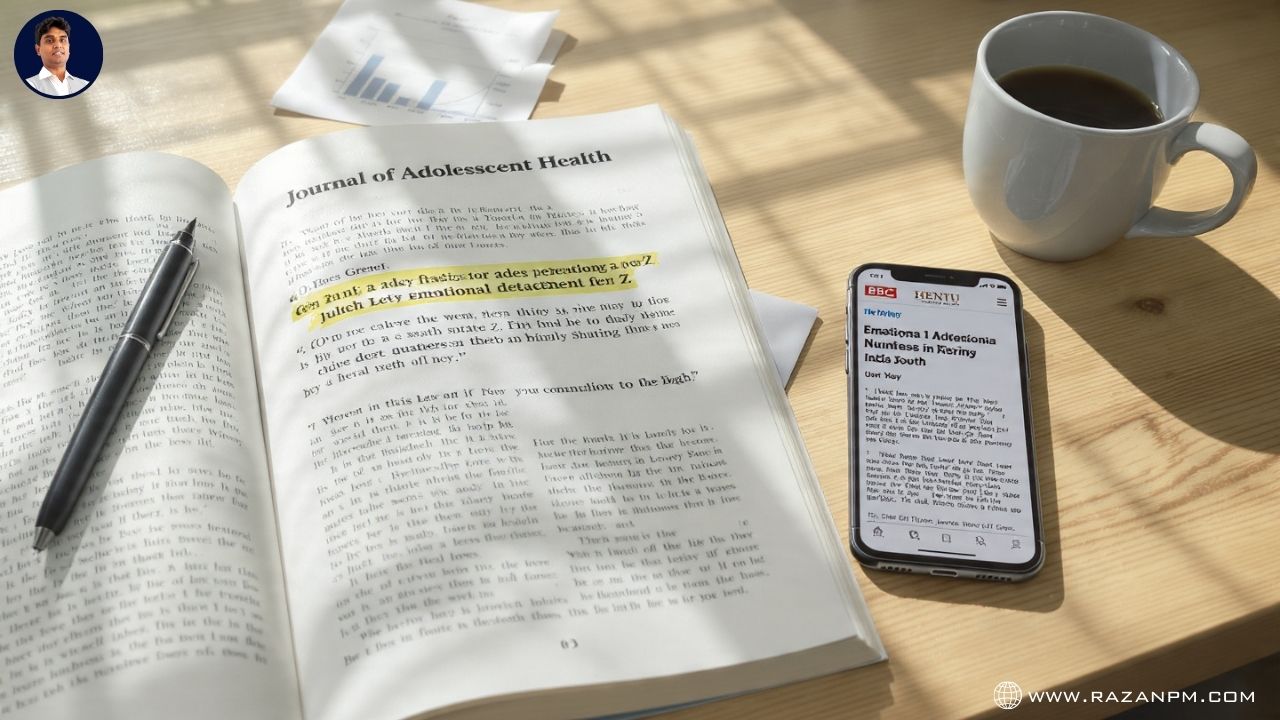
Recent studies highlight disturbing trends:
📌 American Psychological Association (APA)
APA reports that Gen Z is the most stressed and emotionally exhausted generation, leading to emotional dysregulation and shutdown.
📌 Journal of Affective Disorders (2022)
Research shows that emotional numbness is rising due to chronic digital exposure, reducing emotional processing capacity.
📌 Harvard Study on Youth Mental Health
Frequent online conflict, ghosting, and fast-paced communication patterns contribute to freeze response in relationships.
📌 University of Cambridge Neuroscience Updates
Continuous mental load triggers dorsal vagal shutdown, the exact mechanism behind emotional numbness.
In simple terms:
Their brain is overloaded… so it stops feeling.
also read: when silence turns intomisunderstanding?
Let me share a story that still gives me goosebumps.
A 22-year-old girl — let’s call her Meera — came to therapy saying:
“Sir, I think I’m ruining every relationship. I can’t feel anything.”
She loved her partner deeply but whenever a conflict happened, she would freeze, shut down, and go silent for hours.
Her boyfriend thought she didn’t care.
She thought she was “broken.”
During therapy, we discovered something powerful:
As a child, whenever Meera cried, her parents said:
“Stop crying. Don’t be weak.”
So she learned one rule early on:
Feeling = unsafe
Silence = safe
Her mind wasn’t malfunctioning.
It was protecting her — exactly the way it learned in childhood.
The day she realized this, she cried for the first time in months and said:
“So I’m not emotionless… I’m just scared.”
Her healing began the moment she understood:
Emotional shutdown is a survival pattern, not a personality.
also read: the emotional burden behind thebody’s battles
Here’s one powerful tool I give my Gen Z clients:
🧘 1-Minute Emotional Check-In Ritual
Whenever you feel numb, frozen, or emotionally blocked, try this:
Step 1: Name the Physical Sensation
Ask yourself:
Step 2: Label the Emotion Behind It
Use one-word labels:
Even if you're unsure — guess.
Guessing still counts.
Step 3: Write One Line to Yourself
Example:
Why this works:
This simple ritual sends a message to your nervous system:
“You don’t need to freeze. I’m listening.”
You’re building emotional safety — something most Gen Z never got growing up.
also read: 10 coping tools for depression aftertrauma

This is just the beginning.
Emotional shutdown often has deeper layers:
These can’t be untangled in one blog post.
They need personalized, gentle, guided work — step by step.
If reading this made you think,
"Yeh toh main hoon,"
then your healing journey has already started.
also read: why love feels hot then cold?
If this feels familiar — the numbness, the emotional silence, the overwhelm, the difficulty expressing love — please remember:
You don’t have to heal alone.
You don’t have to figure this out by yourself.
As a Govt.Recognized Counsellor & Mind Healer, I’m here to support you with empathy, science-backed guidance, and a safe space to explore your emotions.
🌿 If this resonates, you can book your personal 1:1 consultation here.
I’ll walk with you, one gentle step at a time.
👉 Begin Your Journey with a 1 on 1 Consultation
👉 Begin Your Journey with a 1 on 1 Consultation

Q1. Why is Gen Z experiencing emotional shutdown so often?
Gen Z faces continuous digital overstimulation, comparison pressure, fast-paced communication, and unresolved childhood emotional conditioning. These create overwhelm, leading the nervous system to enter a freeze response as a survival mechanism.
also read: digital romance, real loneliness genz truth
Q2. What does emotional numbness feel like in Gen Z?
Most describe emotional numbness as feeling empty, disconnected, mentally blank, or unable to express feelings — even when they want to. It feels like the emotions are “muted” or “far away.”
also read: 6 warning signs of depression thatincreases heart risk
Q3. Is emotional shutdown the same as depression?
Not always. Emotional shutdown can be a stress response, freeze mode, or emotional overload. Depression includes broader symptoms like sadness, sleep changes, loss of interest, and low energy. A psychologist can differentiate both accurately.
also read: why small fights turn into bigarguments?
Q4. Why do Gen Z individuals shut down during conflicts?
During conflict, their brain often goes into fight–flight–freeze, but many default to freeze due to past emotional invalidation, fear of confrontation, or anxiety. This makes them silent, withdrawn, or emotionally unavailable in the moment.
also read: overthinking messages is killingyour peace
Q5. How does emotional numbness impact relationships?
It creates misunderstandings. Partners may feel ignored, unloved, or unimportant. Emotional block causes difficulty expressing love, avoiding deep talks, and shutting down when overwhelmed, leading to relationship strain.
also read: blood sugar battles affect mentalhealth
Q6. Can emotional numbness be healed with therapy?
Yes, absolutely. Therapy helps identify emotional triggers, heal childhood patterns, regulate the nervous system, and teach expression skills. Many Gen Z clients regain emotional connection within consistent therapeutic sessions.
also read: how to escape the trap of constantdigital talk?
Q7. What is one quick technique to stop emotional shutdown?
A 1-Minute Emotional Check-In works instantly:
This resets the nervous system and reduces freeze response.
also read: how to escape the trap of constantdigital talk?
Q8. When should someone seek professional help?
If emotional numbness lasts for weeks, affects relationships, reduces motivation, or causes shutdowns during simple conflicts, seeking a psychologist or mind healer is the healthiest next step.
also read: how to read body language signs indaily life?