
It usually starts with something very small.
A missed good-night text.
Dinner eaten alone… again.
A harmless thought pops up: “Busy hoga.”
Then another thought quietly follows:
“Busy for me… or busy avoiding me?”
As a Govt.Recognized Counsellor & Mind Healer, I see this pattern almost daily.
What begins as a scheduling issue slowly turns into negative thinking, emotional insecurity, fear of abandonment, and eventually emotional distance in relationships.
Funny thing is, couples don’t fight about work schedules.
They fight about what work schedules make them feel.
And that’s where the real problem begins.
also read: why being together all day stillfeels lonely for couples?
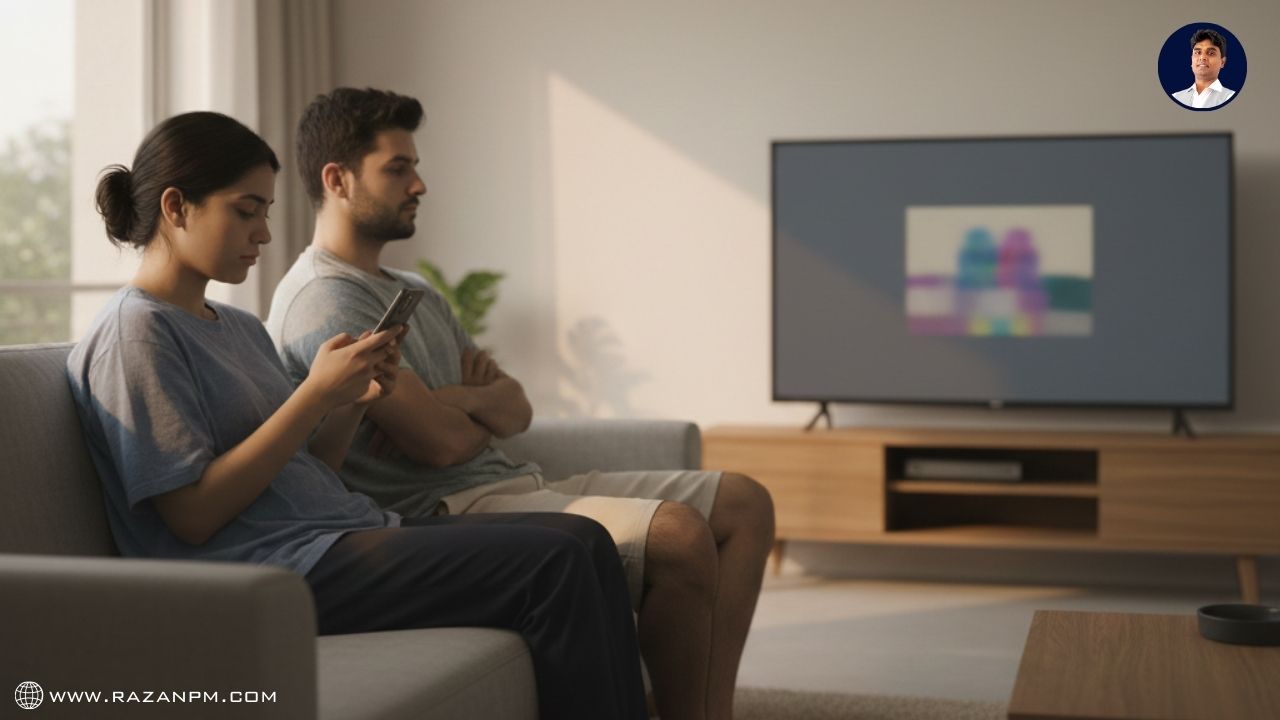
Most couples don’t say,
“Our mismatched work schedules are hurting us emotionally.”
They say things like:
In Hinglish, many clients tell me:
“Hum saath hoke bhi saath nahi hain.”
Different shifts, night duties, rotating schedules, long hours — all of this slowly creates a relationship communication gap. One partner starts adjusting more. The other starts assuming less.
Over time, emotional safety weakens. The mind fills the silence with fear.
also read: when work stress replaces emotionalconnection at home?
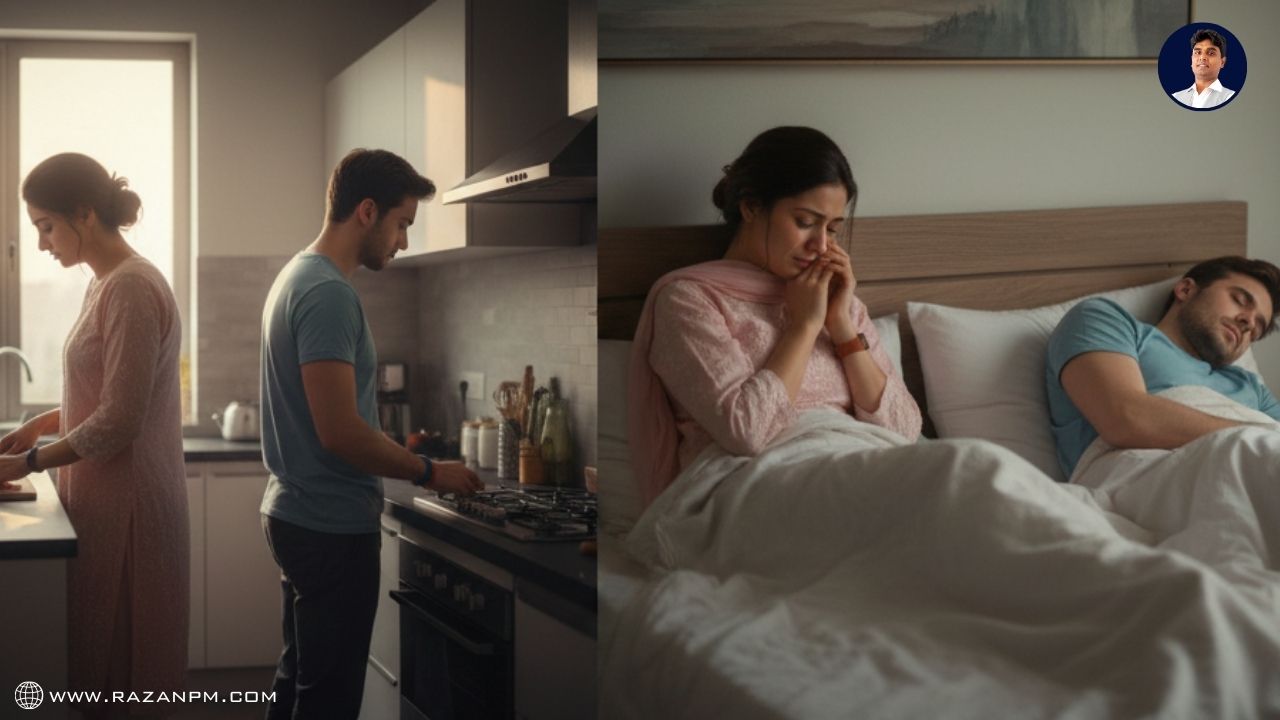
Here are common signs I observe in therapy when mismatched work schedules begin damaging emotional bonding:
These symptoms are not about lack of love.
They are about unmet emotional needs.
also read: how dual income couples slowly drift apart withoutnoticing?
From a clinical lens, this issue often overlaps with:
ICD-11 View
ICD recognizes relationship distress with spouse or intimate partner, where external stressors (like work schedules) disrupt emotional functioning.
This is not a mental illness, but untreated emotional stress can develop into one.
Your brain is trying to protect you from emotional pain — but sometimes it does so by creating distance instead of connection.
also read: why apologizing first does not mean you are wrong?
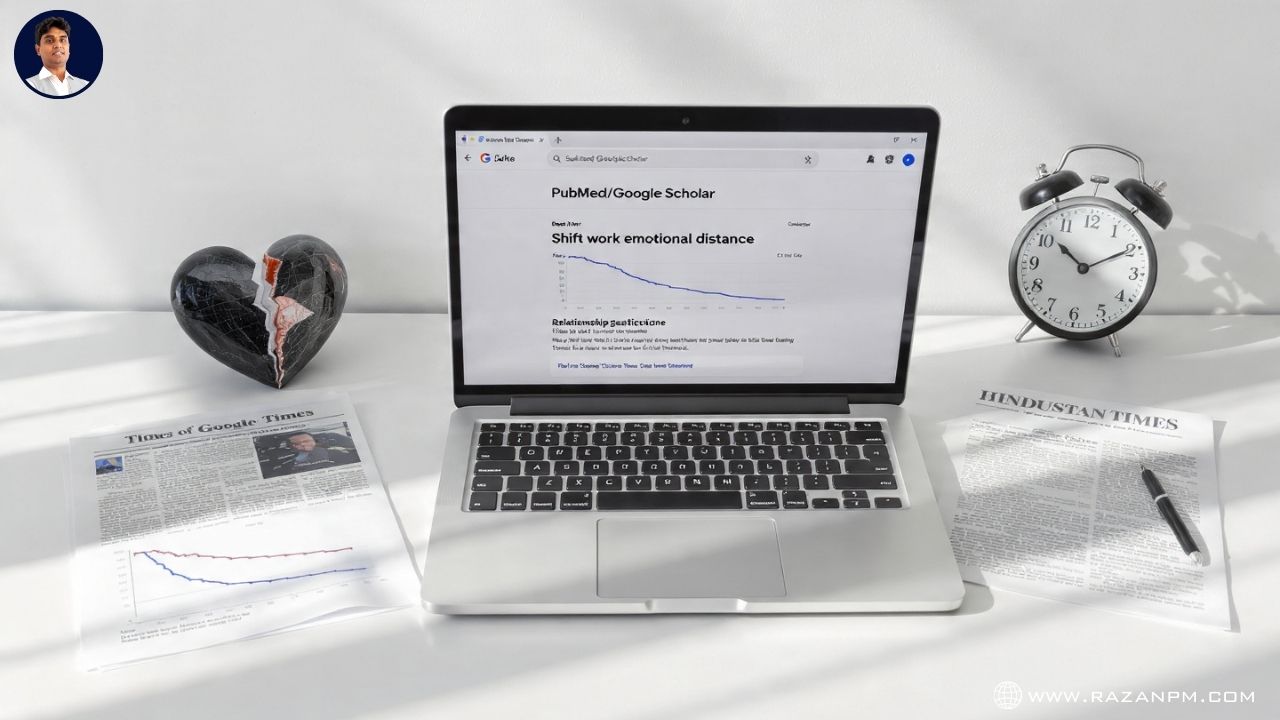
Emotional disconnection increases when couples lack shared routines and quality time
Science confirms what your heart already knows —
time misalignment leads to emotional misalignment.
also read: how constant blame ruins mental health inmarriage?
Let me share a story (details changed for privacy).
A couple once came to me.
She worked day shifts. He worked nights.
She said, “I feel invisible.”
He said, “I’m doing all this for us.”
Both were right.
Both were hurting.
What healed them wasn’t changing jobs.
It was changing emotional expectations and communication patterns.
One evening, she told him something simple:
“I don’t need more time. I need to feel chosen.”
That sentence changed everything.
Healing doesn’t begin with schedules.
It begins with emotional awareness.
also read: why men depression often begins with constantfatigue?

Here’s a small but powerful practice I recommend:
The 10-Minute Emotional Check-In
No phones. No problem-solving. No advice.
Once a day (or alternate days):
Only answer this question:
“How did today make you feel emotionally?”
Not what happened.
But how it felt.
This rebuilds emotional intimacy, even with limited time.
Simple. Practical. Powerful.
also read: the fear of being replaceable in the ai job era
This mini solution helps — but it doesn’t address:
True healing requires guided emotional restructuring, not just tips.
Because emotional distance is rarely about time.`
It’s about unspoken pain.
also read: why gen z feels pressure to recordevery moment
If this blog felt a little too familiar, please know this:
You are not weak. You are emotionally aware.
You don’t have to figure this out alone.
As a Govt.Recognized Counsellor & Mind Healer, I help individuals and couples gently rebuild emotional connection, clarity, and inner safety — without blame or judgment.
If you feel ready, you’re welcome to take the next step.
Book your 1:1 consultation here.
Sometimes healing begins with just one honest conversation.
👉 Begin Your Journey with a 1 on 1 Consultation
👉 Begin Your Journey with a 1 on 1 Consultation

Yes. When partners follow different work timings, emotional connection slowly weakens due to reduced communication, lack of shared routines, and unmet emotional needs. Over time, this creates emotional distance in relationships even when love exists.
also read: why every argument feels like apersonal attack
Feeling lonely in a relationship often happens when emotional availability is missing. Mismatched work schedules reduce emotional presence, leading the mind to feel unseen, unheard, and disconnected.
also read: how emotional isolation triggersschizophrenia like symptoms?
Different work schedules limit quality time, physical closeness, and emotional conversations. This disrupts emotional intimacy and can make partners feel like roommates rather than romantic partners.
also read: why many wives experience silentdepression in marriage?
Not necessarily. Emotional distance is usually a response to stress, fatigue, or unmet emotional needs—not a lack of love. With awareness and emotional effort, connection can be rebuilt.
also read: how gen z confuses trauma bondingwith real love?
Early signs include reduced communication, increased misunderstandings, feeling ignored, overthinking, irritability, and emotional withdrawal. Catching these signs early prevents deeper relationship damage.
also read: how over loyalty is quietly breakinggen z?
Yes. Prolonged emotional disconnection can trigger anxiety, low mood, insecurity, and overthinking. Emotional neglect activates fear responses in the brain, affecting mental health.
also read: why gen z checks their phone whennothing is there?
Even short, intentional emotional check-ins can rebuild connection. It’s not about spending more time, but about being emotionally present during the time you have.
also read: why loneliness hurts more when loveslowly fades?
If emotional disconnection feels persistent, painful, or affects mental health, therapy can help. A psychologist helps uncover emotional patterns and guides couples toward healing safely.
also read: how constant rejection from apartner can trigger anxiety?
Absolutely. Therapy helps partners understand emotional triggers, attachment styles, and communication gaps. It provides tools to rebuild trust and emotional safety despite work pressure.
also read: why women stay silent whenemotionally hurt?
Yes. Emotional distance is reversible when both partners are willing to understand each other emotionally and seek guided support. Healing is possible at any stage.
also read: how friendship breakups impactmental health deeply?