
Let me start with a small scene that almost every Indian family knows.
A girl finishes her MBA. Parents distribute sweets. Relatives proudly say,
“Hamari beti highly educated hai.”
Two years later… the same girl sits in a living room with a tray of tea.
Someone asks politely,
“Beta package kitna hai?”
Another voice follows quickly,
“Cooking aati hai na?”
And then the real question arrives quietly, wrapped in a smile.
“Shaadi ke baad job continue karogi… ya family first?”
Suddenly the degree on the wall becomes decoration.
Education that once looked like power now feels like negotiation currency.
And slowly a dangerous thought enters the mind:
“Did my education actually help me… or did it make things harder?”
This small moment often becomes the beginning of emotional confusion, anxiety, and silent mental pressure.
Because somewhere the message becomes clear.
You can study everything in life…
but at the marriage table, the rules change.
also read: when compromise stops feeling likelove?
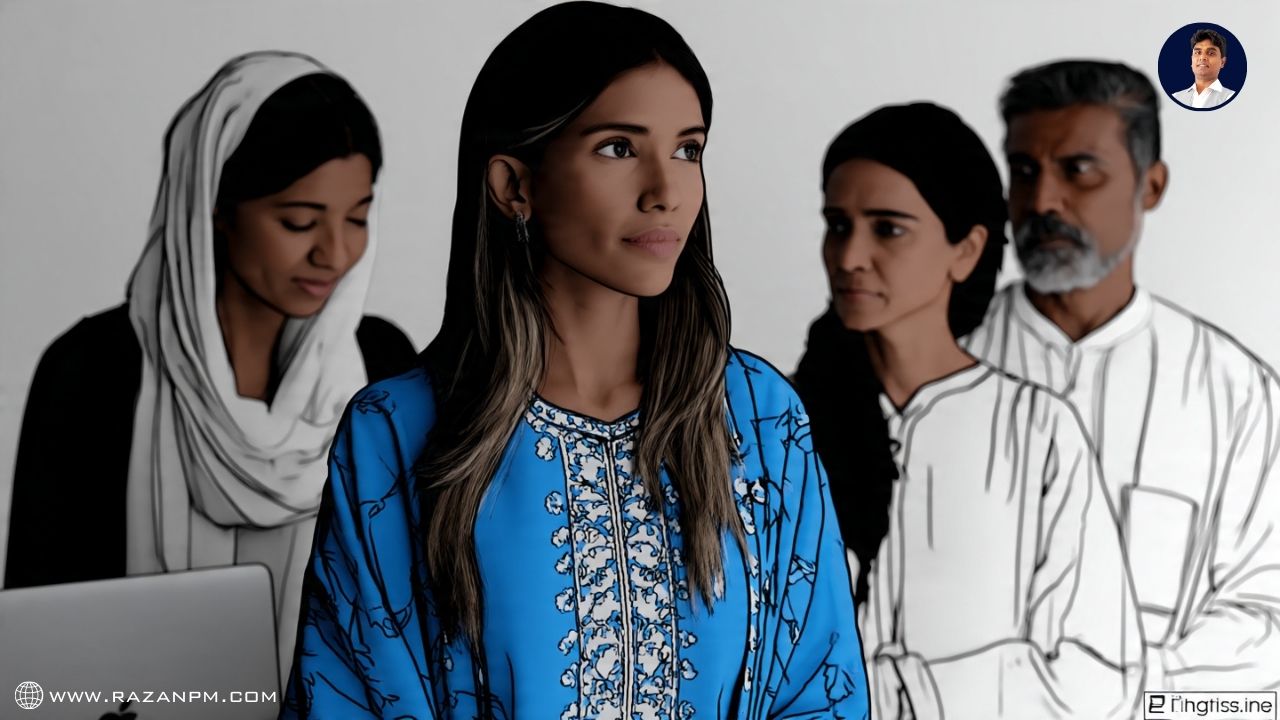
As a Clinical Psychologist and Mind Healer, I meet many women who carry this invisible conflict.
They are educated. Independent. Intelligent.
But when marriage discussions begin, they start hearing statements like:
“Too educated girls are difficult.”
“Career girls cannot adjust.”
“She is overqualified for our son.”
One woman once told me during therapy,
“Sir, I studied so hard to build my identity… but during marriage talks, it felt like my identity was the problem.”
Another said,
“I felt like a product in a marketplace. Qualification was not respect… it was bargaining power.”
Many women silently begin asking themselves painful questions:
Am I too ambitious?
Should I hide my success?
Will marriage punish my education?
This emotional conflict slowly becomes self-doubt.
And the most dangerous part is this:
The problem is not education.
The problem is how society values women’s education.
also read: why perfect couples make you feelinsecure?

When women repeatedly face such situations, certain psychological patterns start appearing.
1. Self Worth Confusion
A woman starts questioning her own achievements.
“She earns more than the groom” suddenly becomes a “problem”.
2. Anxiety During Marriage Discussions
Heart rate increases whenever relatives start talking about proposals.
3. People Pleasing Behaviour
Many women begin downplaying their career achievements just to appear “adjustable”.
4. Emotional Exhaustion
Repeated rejections based on expectations can create deep fatigue.
5. Fear of Being Too Much
Highly educated women often start feeling:
“I should not be too confident.”
This psychological state slowly turns into emotional suppression.
And suppressed emotions rarely stay silent.
also read: marriage roles that still treatwomen unequally
From a clinical perspective, these emotional reactions can relate to patterns described in the DSM 5 Diagnostic and Statistical Manual of Mental Disorders and the ICD 11 International Classification of Diseases.
Not every woman develops a disorder. But chronic social pressure can trigger psychological stress responses.
Some common psychological patterns include:
Adjustment Disorder
When individuals struggle emotionally with major life stressors like marriage pressure.
Symptoms may include:
Anxiety Spectrum Responses
Social judgment can activate anticipatory anxiety, especially before meeting potential partners or families.
Identity Conflict
Psychology describes this as role strain.
A woman is expected to be:
• successful professionally
• traditional domestically
• ambitious but not intimidating
This contradiction creates cognitive dissonance, where internal identity clashes with external expectations.
The mind begins asking:
“Who am I supposed to be?”
also read: how small doubt turn into permanentemotional walls?

Research across India and South Asia has repeatedly highlighted this paradox.
A study published in the Journal of Marriage and Family Studies found that in many traditional societies:
Higher education in women improves employment opportunities but does not always improve marriage prospects.
Another report from the World Bank gender studies shows that:
Many families still prefer brides who are educated but not more successful than the groom.
In psychology we call this status threat perception.
When social roles feel challenged, people unconsciously try to restore traditional balance.
This is why sometimes a woman’s success becomes uncomfortable in matchmaking environments.
It is not about capability.
It is about social conditioning.
also read: why feeling loved is aboutunderstanding not effort?
Let me share a real story that stayed with me.
A client once came to me. Let’s call her Aisha.
She was a software engineer, confident and kind.
But after several marriage meetings, she began saying things like:
“Maybe I should quit my job.”
“Maybe men feel insecure because of my career.”
One day during therapy she said something heartbreaking.
“I feel like I have to shrink myself to be loved.”
That sentence stayed with me.
So we started working on something deeper than marriage.
We started working on identity clarity.
Instead of asking:
“Will someone accept me?”
We shifted the question to:
“Who deserves to walk beside the real me?”
Slowly her mindset changed.
She stopped performing.
She started being authentic.
Months later she met someone who said something simple.
“I respect what you have built.”
That relationship worked.
Not because she changed.
But because she stopped apologizing for her growth.
also read: when she stops fighting and startwithdrawing?

If you ever feel that your achievements are becoming a burden during marriage discussions, try this small psychological exercise.
I call it Identity Anchoring.
Step 1
Write down three achievements you are genuinely proud of.
Not society. Not family.
Just you.
Step 2
Write what those achievements say about your personality.
Example:
MBA degree → Discipline and hard work
Career success → Independence
Helping family financially → Responsibility
Step 3
Read this sentence slowly:
“My education is not a problem. It is a reflection of my strength.”
This small exercise helps the brain re-anchor self worth internally rather than socially.
Because confidence that comes from outside approval is fragile.
But confidence built on self awareness is powerful.
also read: how family interference breaks happycouples?
But here is something important.
Identity clarity is only the first step.
The deeper solution involves understanding:
These layers often operate quietly in the background.
And without guided awareness, many people keep repeating the same emotional patterns in relationships.
A blog can open the door.
But real transformation requires guided inner work.
also read: when ego wins and love startslosing?
If parts of this story felt familiar to you, please remember something important.
You are not alone.
Many intelligent, capable women struggle with this silent paradox between education and marriage expectations.
And there is absolutely nothing wrong with you.
Sometimes all we need is a safe space where someone helps us untangle these emotional knots gently.
If you would like guidance in understanding your emotional patterns, relationship fears, or identity conflicts,
you don’t have to figure it out alone.
You can book a private 1:1 consultation session where we explore your story with care and clarity.
Sometimes one honest conversation can bring more healing than months of silent confusion.
👉 Begin Your Journey with a 1 on 1 Consultation
👉 Begin Your Journey with a 1 on 1 Consultation

Many highly educated women face challenges during marriage discussions because traditional expectations often prioritize household roles over professional identity. In some cases families may feel insecure if the woman is more qualified or earns more than the groom, which creates pressure and emotional confusion.
also read: how financial problems break strongmarriages?
Higher education can sometimes create a paradox in traditional matchmaking systems. While education is valued, families may still expect women to adjust their careers after marriage. This contradiction can make marriage negotiations more complicated for successful women.
also read: why emotional safety is the realrelationship glue?
Educated women may experience anxiety during marriage talks because they feel judged on multiple levels such as career, salary, personality, and family expectations. This pressure can create self doubt and emotional stress.
also read: how to fix emotional loneliness withyour partner?
Women may experience emotional stress, fear of rejection, identity conflict, and anxiety during arranged marriage meetings. The feeling of being evaluated like a “candidate” can affect self esteem and create mental pressure.
also read: why talking more is not fixingemotional distance?
Educated women can protect their self worth by focusing on their identity, achievements, and personal values instead of trying to meet unrealistic expectations. Healthy relationships grow from mutual respect, not from reducing one’s own strengths.
also read: who decides what married women canwant?
Yes, continuous marriage pressure can sometimes lead to anxiety, low self esteem, stress, or adjustment difficulties. Seeking emotional support or professional guidance can help individuals manage these feelings in a healthy way.
also read: when motherhood is treated as anobligation?
The qualification paradox happens when society encourages women to be educated but still expects them to remain less successful than their partners. This contradiction creates tension during marriage discussions.
also read: how comparing marriages destroywomens inner peace?
Families can support educated daughters by valuing their career goals, respecting their independence, and encouraging relationships based on compatibility rather than social pressure.
also read: why many women feel lonely aftermarriage?