
Have you ever noticed how something tiny can turn into a full emotional drama in your head?
Like… your husband says, “Why do you need another course? You’re already busy.”
Simple sentence. Neutral tone.
But inside your mind?
“Oh… maybe I’m selfish.”
“Maybe good wives don’t think about career growth.”
“What if I’m asking for too much?”
“What if I lose my family’s love?”
And just like that, a small moment becomes fear, then guilt, then silent emotional trauma.
As a Govt.Recognized Counsellor & Mind Healer, I’ve seen this pattern again and again. And the question that keeps coming back is this:
Who decides what married women can want?
also read: when motherhood is treated as anobligation?

Somewhere after marriage, many women unknowingly enter an invisible permission system.
Permission to rest.
Permission to work.
Permission to dress.
Permission to dream.
Permission to want.
It doesn’t happen loudly. There’s no official announcement.
But slowly, society, in-laws, culture, sometimes even husbands start shaping an invisible boundary around her desires.
And the most painful part?
Often, she starts policing herself.
also read: how comparing marriages destroywomens inner peace?

In my therapy room, women don’t say, “I am oppressed.”
They say:
Many feel stuck between being a “good wife” and being an individual.
They feel:
One woman told me softly, “Before marriage, I knew what I liked. Now I ask everyone else first.”
That sentence stayed with me.
also read: why many women feel lonely aftermarriage?

Some even develop psychosomatic symptoms like headaches, acidity, body pain — because unexpressed emotion always finds a way out.
“Dil ki baat dabaoge, toh body bolne lagegi.”
also read: why living with in laws drainsemotional health?
Now let’s look at this clinically.
The experience of feeling controlled or emotionally restricted in marriage may not always be a “disorder” in itself. But prolonged suppression can lead to diagnosable conditions.
According to the DSM 5 and ICD 11, patterns we often see include:
When a woman constantly ignores her own needs to maintain harmony, it creates chronic stress activation in the nervous system.
This activates:
From a psychological perspective, this links to:
1. Learned Helplessness: When repeated attempts to express desires are dismissed, the brain learns, “It’s safer not to try.”
2. Cognitive Distortions Thoughts like:
3. Identity Diffusion Over time, she stops knowing what she wants at all.
This is not weakness.
This is conditioning.
also read: why women are called difficult forsetting boundaries?
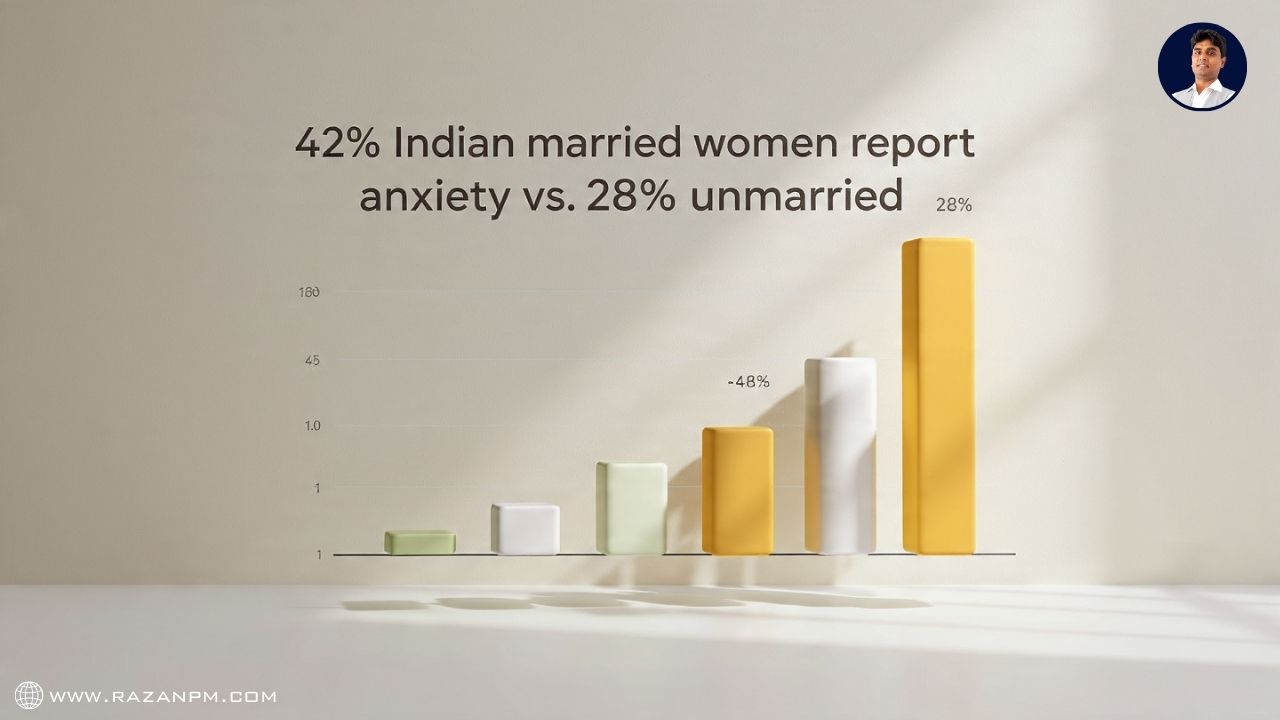
Research in marital psychology shows that autonomy support in marriage strongly predicts:
A 2018 study on women’s mental health and marital roles found that women who reported low decision-making power had significantly higher anxiety and depressive symptoms.
When autonomy is denied, emotional distress increases.
Marriage thrives on connection, not control...
also read: why marriage changes a woman morethan you realize?
Years ago, a client came to me. Let’s call her Meera.
Meera was “perfect” on paper. Loving wife. Caring daughter-in-law. Mother of two.
But she whispered one day, “I don’t feel alive.”
When I asked her what she wanted, she went silent for almost two minutes.
Then she cried.
“I don’t remember.”
We didn’t start with confrontation. We didn’t start with rebellion.
We started with remembering.
Her favorite color.
Her favorite music.
The way she loved writing poetry before marriage.
Slowly, she began taking 20 minutes daily for herself. No announcement. No drama.
Then she enrolled in a small online course.
Then she started writing again.
Her husband initially resisted. But when she stopped asking for permission and started calmly owning her choices, the dynamic shifted.
Not because she fought.
But because she stopped shrinking.
The biggest shift was not external.
It was internal.
She stopped believing that love requires self-erasure.
also read: the full time job married women dowithout pay

Here’s a small but powerful exercise you can try right now.
Step 1: Take a blank paper.
Write 10 things you want. Big or small.
Example:
Step 2: Now circle the ones you feel guilty about.
Notice something.
The guilt is not proof that the desire is wrong.
It is proof that you were trained to ignore it.
Step 3: Choose just ONE small desire.
Act on it this week without over explaining.
For example:
“I will take a 30 minute walk daily.”
No justification. No drama. Calm ownership.
This is how psychological boundaries begin.
Small. Quiet. Consistent.
also read: why marriage expectations hurt womenmore than we admit?
But let me be honest.
A blog cannot undo years of conditioning.
Deep patterns around:
Need guided work.
Because sometimes, the real question is not “Who decides what married women can want?”
It is:
“Why do I feel unsafe wanting anything at all?”
And that answer lives in your nervous system history.
also read: how financial support turns intocontrol in marriage?
If this feels familiar, please know something very important.
You are not demanding.
You are not dramatic.
You are not selfish.
You are human.
And humans are allowed to want.
If you feel lost in your marriage, struggling with anxiety, identity loss, or emotional suppression, you don’t have to figure it out alone.
As a Govt.Recognized Counsellor & Mind Healer, I work gently with women to rebuild self identity, emotional strength, and healthy boundaries.
If this resonates with you, you can book a 1:1 consultation.
You deserve support.
👉 Begin Your Journey with a 1 on 1 Consultation
👉 Begin Your Journey with a 1 on 1 Consultation

Many married women feel guilty because of deep cultural conditioning that associates “good wife” behavior with sacrifice. Over time, repeated messaging creates internalized guilt whenever they prioritize personal growth, career, rest, or independence.
also read: why marriage changes how societysees women?
Yes, it is very common. Many women experience identity confusion after marriage due to new roles, expectations, and reduced autonomy. If this feeling persists with sadness or anxiety, professional guidance can help.
also read: hidden responsibilities women handle withoutcredit
Common signs include anxiety, irritability, constant guilt, people pleasing, sleep issues, low self esteem, and feeling unheard. Physical symptoms like headaches or fatigue may also appear.
also read: marriage guilt every successful woman secretlyfeels?
Yes. Research shows that reduced autonomy and lack of personal choice in marriage can increase the risk of anxiety and depressive symptoms, especially when emotional needs are consistently ignored.
also read: why marriage stress hits womens mental healthhard?
Self identity can be rebuilt through small steps such as setting boundaries, reconnecting with hobbies, practicing self reflection, and seeking emotional support through therapy or counseling.
also read: when marriage suffers because family always comesfirst?
No. Healthy relationships allow both partners to maintain individuality. Wanting personal time, growth, or emotional expression is a basic psychological need, not selfishness.
also read: 7 reasons women stay silent when emotionally hurt?
If she feels persistent anxiety, emotional numbness, identity loss, frequent crying, or fear of expressing her needs, it may be helpful to consult a mental health professional.
also read: why so many people struggle with hyperindependence trauma?
Society often promotes traditional gender roles that prioritize family over individuality. These expectations can subconsciously shape what women believe they are “allowed” to want.
also read: why a wifes higher income triggers emotionaldistance in men?