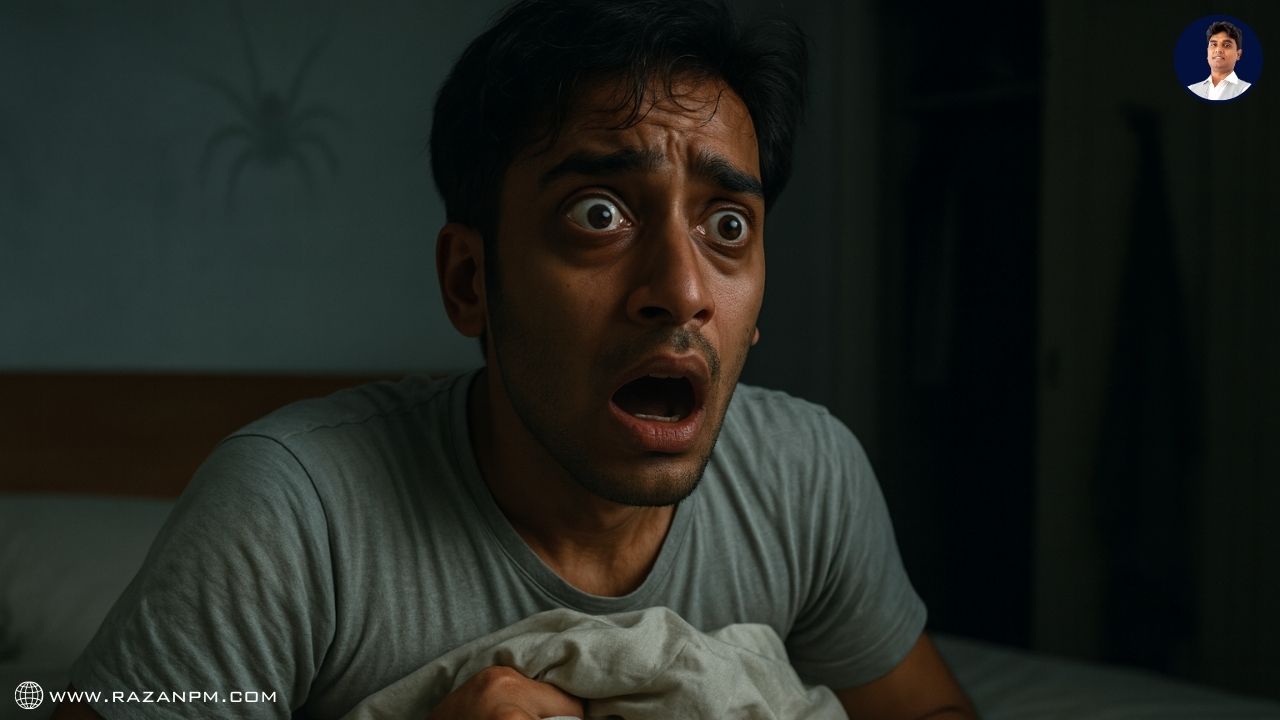
Ever noticed how a tiny sound at night suddenly feels like a Bollywood horror movie background score?
A shadow on the wall becomes a bhoot, a small lizard turns into a dragon, and next thing you know, you're wide awake thinking, “Aj toh meri neend gayi.”
Funny thing?
It’s usually not the lizard, the darkness, or the noise itself…
It’s our phobias, quietly hijacking our mind—especially at night.
As a Govt.Recognized Counsellor & Mind Healer, I’ve seen this pattern hundreds of times. The day keeps us distracted. But at night?
The mind whispers stories. And sometimes… those stories scare us more than the truth.
also read: how fibromyalgia fuels hiddendepression?
Many people assume sleep issues come from stress or overthinking—and yes, they do. But a big hidden culprit?
Phobias that activate at night, causing nighttime panic, restlessness, and insomnia.
You lie down to sleep, and suddenly your brain says:
“What if there’s something under the bed?”
“What if the room feels too closed?”
“What if I get stuck?”
“What if something is crawling?”
Phobias don’t just cause fear.
They cause racing heartbeat, sweaty palms, shallow breathing, and that strange feeling that something bad might happen.
also read: why saying i love you is not enough?
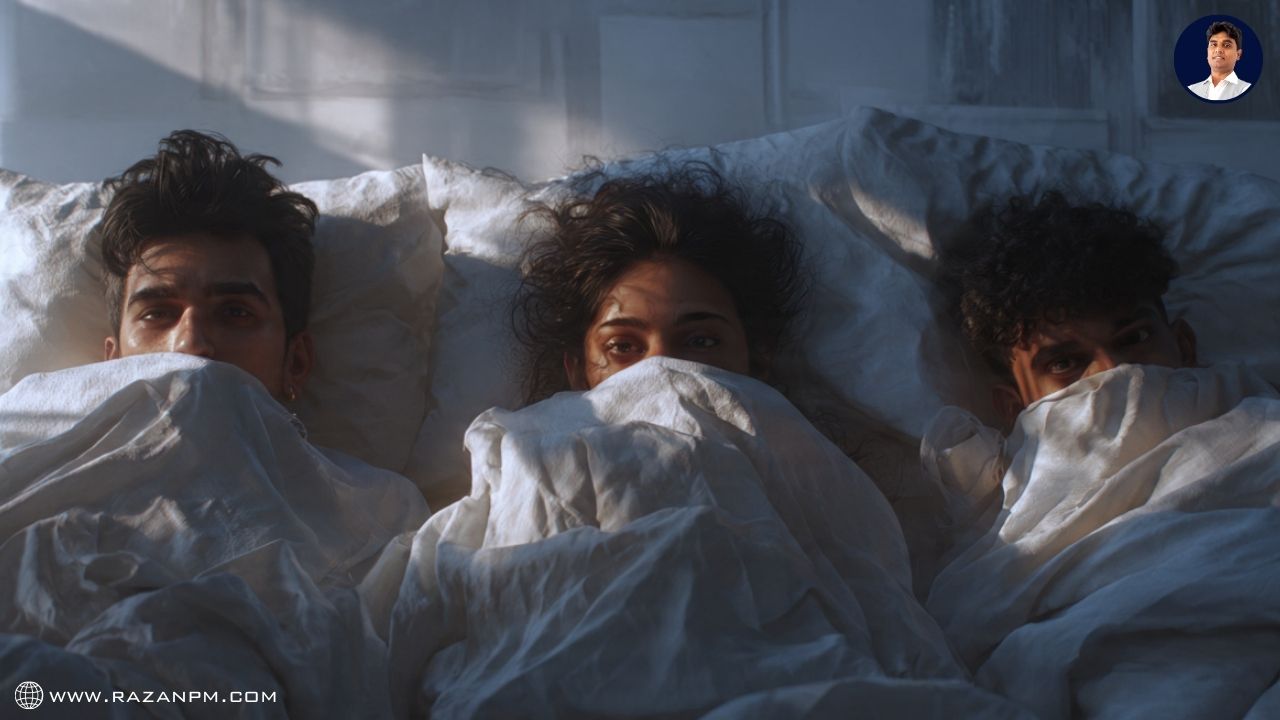
If this sounds like you, you're not alone.
People who struggle with nyctophobia fear of the dark, claustrophobia, or agoraphobia, often tell me:
Phobias don’t need logical reasons—they only need a trigger.
At night, when the world quiets down… the brain turns the volume up.
also read: why emotional intimacy feels unsafefor some partners?
Here are the six high-impact phobias that silently ruin sleep:
1. Nyctophobia – Fear of Darkness
Most common in children but continues secretly in adults.
Nighttime darkness heightens the imagination.
You may avoid turning off the lights or feel unsafe in dim spaces.
2. Claustrophobia – Fear of Closed Spaces
People often wake up gasping, feeling the room is too tight.
Even blankets can feel suffocating.
3. Agoraphobia – Fear of Being Trapped
Not just open spaces—fear of being unable to escape.
Nighttime quietness intensifies the feeling of being stuck.
4. Somniphobia – Fear of Falling Asleep
Yes, it exists.
People fear losing control or having nightmares.
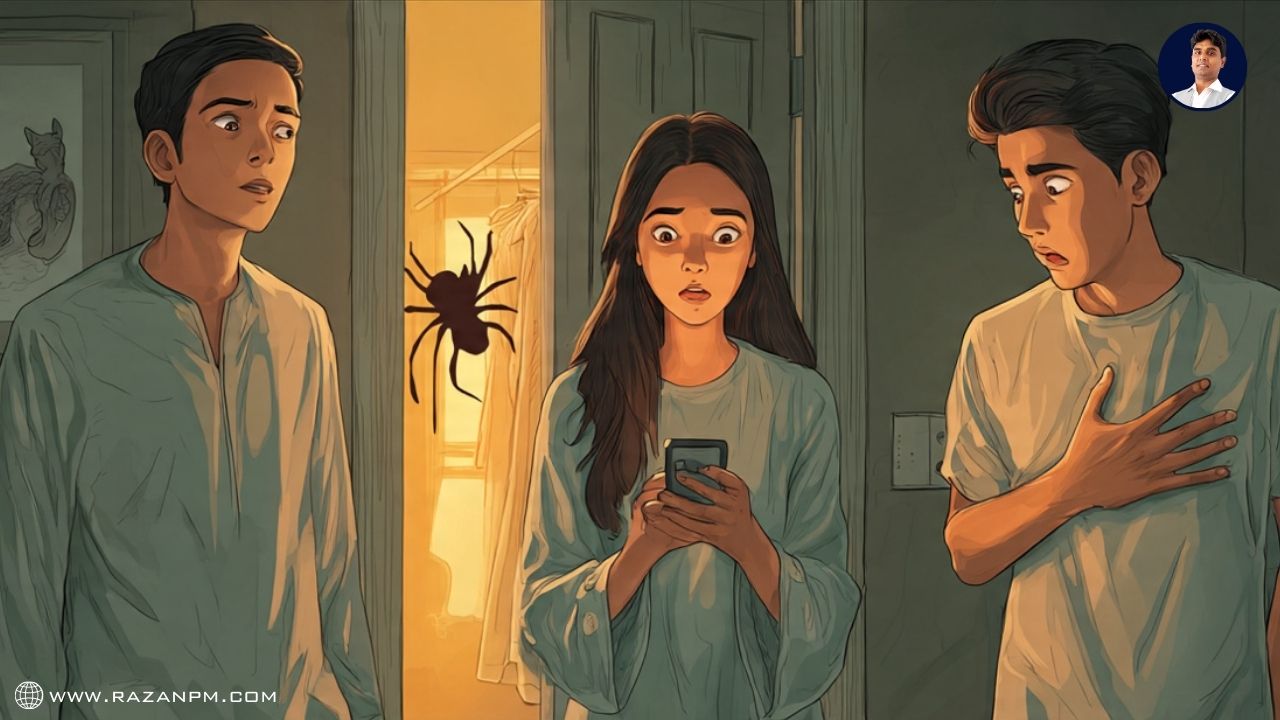
5. Arachnophobia – Fear of Spiders
You see one spider at 6 PM…
Your sleep is gone for the next two nights.
6. Hypnagogic Hallucination–Related Phobia
Fear of the sensations that occur between wakefulness and sleep
(known as hypnagogic states).
People fear:
This triggers instant panic and jolts of fear.
also read: how hormonal shifts can triggerdepression?
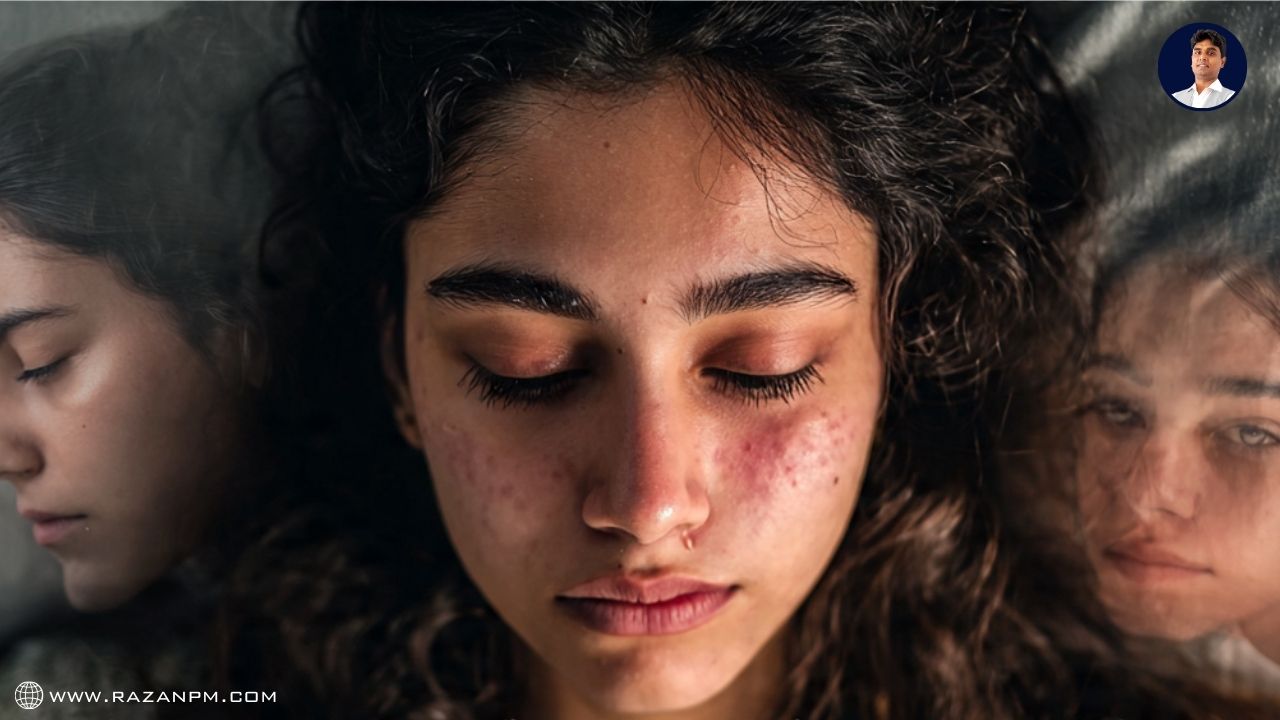
If even 3–4 of these sound familiar, your sleep issue may be phobia-driven, not just stress-driven.
also read: how chronic pain fuels depression atany age?
In both DSM-5 and ICD-11, phobias fall under Anxiety Disorders.
They’re defined by:
1. Persistent, excessive fear
2. Immediate anxiety response
3. Avoidance behavior
4. Impairment in daily functioning
Nighttime triggers make phobias worse because:
1. Lower Cognitive Defenses
Your reasoning power drops at night, making fear stronger.
2. Hyperactive Amygdala
The brain’s fear center becomes more sensitive when tired.
3. Reduced Environmental Control
You can’t control darkness, silence, or night-time sounds.
4. Overactive Default Mode Network
This is the part of the brain responsible for internal storytelling.
Yes—the overthinking machine.
This is why phobia-driven sleep disturbance feels so real and intense.
also read: when silence turns intomisunderstanding?
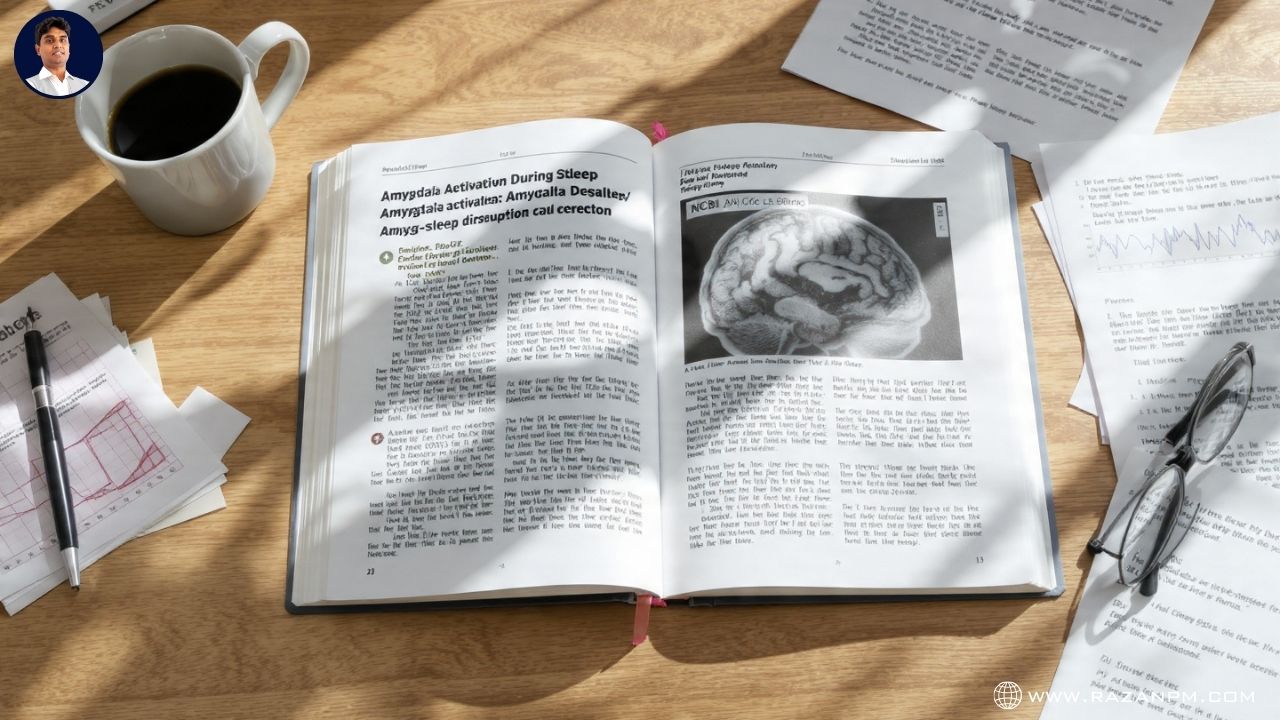
Studies from the National Institute of Mental Health highlight:
People with phobias have 40–60% higher nighttime anxiety
Sleep deprivation increases fear sensitivity by up to 30%
Phobia activation at night disrupts REM sleep, causing panic dreams
Research links claustrophobia and agoraphobia with more frequent nocturnal panic attacks
A 2023 sleep psychology study showed:
“Fear-based hyperarousal is one of the strongest predictors of insomnia.”
Translation?
When your fear switch is ON, your sleep switch can’t turn ON.
also read: the emotional burden behind thebody’s battles
Years ago, a 32-year-old client, let's call her Riya, came to me.
She said, “Sir, mujhe raat me aise lagta hai ki koi mujhe dekh raha hai.”
She slept with lights on, TV running, even background music—
but still woke up breathless.
Her husband thought she was just overthinking.
Her parents said, “Bas himmat rakho.”
But inside, she felt trapped.
During therapy, I discovered she had nyctophobia triggered by childhood trauma, but she’d never connected the dots.
One night, she told me,
“I’m tired of being scared of something that isn’t even there.”
That hit me deeply.
We worked together using:
Within 8 weeks, she slept peacefully for the first time in years.
When she texted me,
“Sir, aaj main bina light ke soyii,”
I genuinely felt emotional.
This is why I write, why I teach, why I heal —
Because fear shouldn’t win.
Sleep shouldn’t be a battle.
also read: 10 coping tools for depression aftertrauma
The 3–Step Nighttime Reset Ritual
This technique calms the mind’s fear center and reduces phobia-triggered panic.
Step 1: Safe Vision Anchor
Before bedtime, look around your room and say aloud:
This reduces nighttime illusion-based fear.
Step 2: Grounding Touch
Place your hand on your chest or pillow.
Feel the physical sensation.
This signals your brain: “You’re here, not in danger.”
Step 3: Slow Exhale Method
Inhale for 4
Hold for 2
Exhale for 6
The long exhale lowers your body's threat response.
Try this for 3 nights.
Most people feel an instant shift.
also read: why love feels hot then cold?

This small technique helps reduce symptoms,
but long-term phobia healing needs:
And these can’t be taught fully in a single blog.
They need structured, guided transformation.
also read: digital romance, real loneliness genz truth
If you’re reading this and thinking,
“This sounds like me…”
please know — you’re not alone.
Fear doesn’t make you weak.
It makes you human.
And healing is completely possible.
If you ever feel ready,
I’m here to support you gently through your journey.
If this feels familiar, you don’t have to figure it out alone.
👉 Begin Your Journey with a 1 on 1 Consultation
👉 Begin Your Journey with a 1 on 1 Consultation

Q1. Can phobias really cause sleep problems?
Yes. Phobias trigger the brain’s fear center (amygdala), causing racing thoughts, rapid heartbeat, and nighttime panic. This makes falling asleep or staying asleep difficult.
also read: 6 warning signs of depression thatincreases heart risk
Q2. Why do phobias feel stronger at night?
At night, the mind has fewer distractions. The brain’s fear circuits become more active, making even small triggers feel larger, especially in darkness or silence.
Q3. How do I know if my insomnia is phobia-related?
If you experience rapid heartbeat, fear, restlessness, or panic specifically at night or before sleeping, it may be connected to hidden phobias like nyctophobia, claustrophobia, or agoraphobia.
also read: why small fights turn into bigarguments?
Q4. Can nighttime panic attacks come from phobias?
Absolutely. Many nocturnal panic attacks are rooted in unresolved fears or specific phobias that activate when the brain relaxes before sleep.
Q5. What are the most common sleep-disrupting phobias?
The top ones include nyctophobia (fear of dark), claustrophobia, agoraphobia, somniphobia, arachnophobia, and hypnagogic-related phobia.
also read: overthinking messages is killingyour peace
Q6. Are phobia symptoms listed in DSM or ICD?
Yes. Both DSM-5 and ICD-11 classify phobias under Anxiety Disorders and outline fear, avoidance, and significant functional impairment as key criteria.
Q7. Can phobias be cured completely?
Yes, with proper treatment like exposure therapy, cognitive restructuring, trauma-processing, and guided mind–body techniques, phobias can be significantly reduced or resolved.
also read: blood sugar battles affect mentalhealth
Q8. Is there a quick technique to calm nighttime fear?
Yes. A simple Nighttime Reset Ritual—vision anchoring, grounding touch, and slow exhale breathing—can quickly lower fear responses and help you fall asleep.
Q9. Should I sleep with lights on if I have nyctophobia?
It’s okay temporarily, but long-term healing requires gradual exposure and psychological support so your brain learns that darkness is safe.
also read: how to escape the trap of constantdigital talk?
Q10. When should I seek professional help for sleep-related phobias?
If your sleep is regularly disrupted, you feel constant fear at night, or panic attacks are affecting your daily functioning, guided therapeutic support is recommended.