If overthinking was an Olympic sport, half of Gen Z would bring home gold medals.
Like imagine-phone charger missing for 10 seconds, aur dimaag turant bolta hai,
“Bas, life is over. Something is wrong. I am irresponsible. Main kabhi bade ho hi nahi paunga.”
And trust me, after 7+ years as a Govt.Recognized Counsellor & Mind Healer, I’ve seen this happen with everything—
a delayed text, a tough assignment, a sudden silence, even a simple “we need to talk.”
Gen Z is emotionally mature enough to decode everyone’s trauma, maar daalti analytical mind se…
but practically unprepared for real life, bills, responsibilities, and long-term decisions.
Let’s dive into why.
Gen Z Emotional Growth vs Life Skills

Today’s youth feels emotions deeply—
fear, pressure, burnout, empathy, attachment issues—everything on overdrive.
But when it comes to life skills?
Cooking, budgeting, decision-making, conflict handling—dheere dheere buffering.
Gen Z often tells me in therapy:
“Emotionally I feel 40. Practically I feel 14.”
This conflict is not their fault. It’s a psychological cocktail created by modern lifestyle, digital exposure, and chronic stress.
What Gen Z Secretly Struggles With
If you’re Gen Z reading this, you’ve probably felt this:
Emotionally wise… practically confused.
Mature yet unprepared.
And it’s painful because you feel like you’re supposed to have life figured out, but you don’t.
also read: the real psychology behind left onread anxiety
Signs Gen Z Feels Overly Mature

Here are common signs I see in my therapy sessions, showing this emotional-practical mismatch:
1. Emotional Hyper-Awareness
You deeply notice moods, energies, tone changes.
Par khud ka emotional system overload ho jata hai.
2. Decision Paralysis
Even small decisions feel overwhelming—
“What to wear?” becomes a 20-minute TED Talk in your head.
3. Fear of Adulthood
Bills, relationships, responsibility = anxiety attack trigger.
4. High Empathy but Low Boundaries
You care too much but burn out fast.
5. Self-Criticism
“Why am I so behind in life?”
“Others are doing better than me.”
6. Early Burnout
Mentally exhausted even before life actually starts.
These are not personality flaws. These are symptoms of deeper psychological patterns.
also read: how to stop the cycle of pain anddepression?
Psychology Behind Gen Z Maturity Gap
From a clinical perspective, these symptoms overlap with patterns described in DSM-5 and ICD-11, particularly:
1. Generalized Anxiety Patterns
(Not diagnosing—just explaining mechanisms.)
Chronic worry, restlessness, overthinking—very common in high-pressure digital environments.
2. Adjustment Difficulties
Struggling to cope with transitions—school to college, college to career.
3. Emotional Dysregulation Tendencies
Feeling emotions more intensely and for longer periods.
4. Identity Development Challenges
In psychology, ages 18–25 involve “Identity vs Role Confusion.”
Social media has magnified this 10X.
5. Early Exposure to Adult Themes
Trauma talk, mental health content, global crises—access milta hai before emotional immaturity settles.
Modern lifestyle forced Gen Z to grow emotionally faster…
but it did not give enough real-world experience to grow practically.
Research Explaining Gen Z Readiness Gap
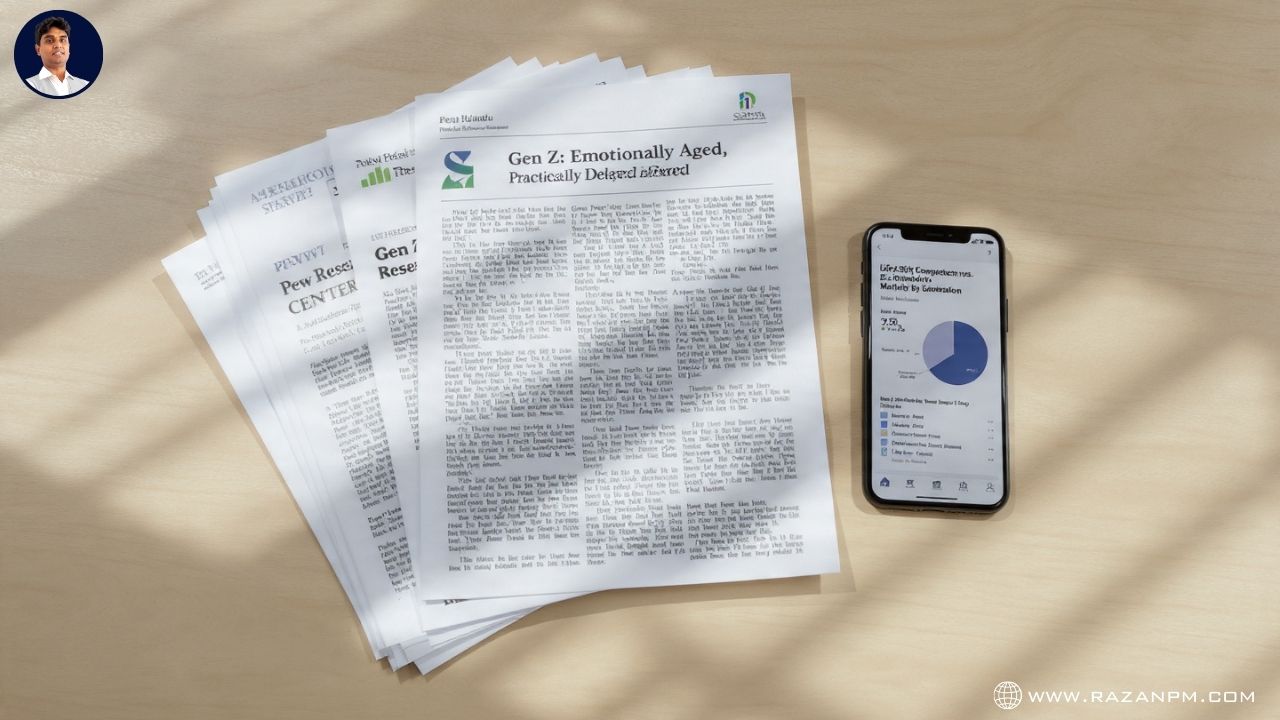
Several studies show this emotional-practical imbalance:
1. APA Report on Gen Z Stress
American Psychological Association found Gen Z experiences the highest stress levels, often feeling older mentally due to emotional overload.
2. Stanford Study on Early Cognitive Maturity
Gen Z processes emotional information faster due to digital stimuli—but this does not improve decision-making skills.
3. Deloitte Millennial and Gen Z Survey
Gen Z feels “overprepared mentally but underprepared practically” due to lack of real-world skill training in education systems.
4. Harvard Study on Overexposure
Continuous news + internet exposure accelerates emotional maturity but reduces resilience.
This combination creates the perfect storm:
Emotionally mature. Practically unprepared.
How Gen Z Can Find Real Balance
A few years ago, a 20-year-old girl came to my clinic, crying.
Not because of heartbreak.
Not because of trauma.
But because she didn’t know how to fill a simple bank form.
She said:
“I can handle my friends’ breakdowns. I can talk about deep emotional trauma.
But when it comes to real life, I feel like a lost child.”
That hit me hard.
This was not a lack of intelligence.
This was emotional exhaustion mixed with zero practical guidance.
We worked together slowly—one skill at a time.
Listening, supporting, step-by-step guiding.
Today she manages her finances, communicates clearly, and handles daily life with confidence.
That day I realized:
Gen Z doesn’t need motivation. They need practical emotional skill-building.
They don’t need lectures. They need guidance.
They don’t need to be fixed. They need to be understood.
This blog is born from those real stories.
Simple Daily Steps for Gen Z Balance
Here is a small practical step you can try right away:
⭐ The 5-Minute Emotional-Practical Balance Routine
This helps balance emotional maturity with real-world preparedness.
Step 1: Emotional Check-In (1 minute)
Ask yourself:
Step 2: One Practical Action (2 minutes)
Pick ONE small adulting task you’ve been avoiding:
Examples:
Micro-action… but massive confidence boost.
Step 3: Self-Compassion Affirmation (1 minute)
Say:
“I’m learning. I’m growing. I’m not behind.”
Step 4: Realistic To-Do List (1 minute)
Write just two tasks for the day.
Not 10.
Not 20.
Just two.
This builds confidence, reduces overwhelm, and improves practical ability.
Why Deeper Guidance Is Needed

This mini practice is powerful, but it’s only the first layer.
The deeper solution requires:
These can’t be fixed in one blog.
They require personalized, structured guidance, because every mind works differently.
And that’s exactly what I help people with in one-on-one sessions.
Support for Gen Z Emotional Stress
If this blog felt relatable,
if you see yourself in these words,
if you’re tired of feeling emotionally old but practically lost…
You don’t have to figure it out alone.
I’m here to support you as a
Govt.Recognized Counsellor & Mind Healer,
with calm guidance, structured tools, and heart-centered counseling.
If you feel ready, you can book your consultation here.
Let’s walk this journey together—one small step at a time.
👉 Begin Your Journey with a 1 on 1 Consultation
👉 Begin Your Journey with a 1 on 1 Consultation

1. Why does Gen Z feel emotionally older than their age?
Gen Z consumes emotional content, global news, and mental-health narratives very early, which makes them emotionally mature faster. Their brain becomes trained to process deep emotions earlier than previous generations.
also read: how isolation triggers illness anddepression together?
2. Why is Gen Z practically unprepared for adulthood?
Because schools and homes rarely teach real-life skills like budgeting, communication, decision-making, conflict handling, or stress regulation. Emotional maturity grows, but practical experience stays limited.
also read: how disorders like insomnia fueldepression?
3. Is feeling “mature yet unprepared” normal for Gen Z?
Yes. It is one of the most common patterns in today’s youth. Overthinking, burnout, and emotional overload create a big gap between internal maturity and real-world readiness.
also read: what to do when i love you gets noreply?
4. Does Gen Z experience more stress and anxiety than older generations?
Studies show Gen Z faces higher stress due to digital pressure, comparison culture, academic pressure, global uncertainty, and constant connectivity. These factors intensify emotional fatigue.
also read: how fear of rejection kills realconnection?
5. What psychological reasons explain Gen Z’s maturity gap?
According to DSM and ICD frameworks, anxiety patterns, adjustment issues, emotional dysregulation, and early exposure to adult themes contribute to the gap between emotional maturity and practical readiness.
also read: why timing turns simple talks intobig arguments?
6. How can Gen Z reduce this emotional–practical imbalance?
Small daily steps like emotional check-ins, micro-adulting tasks, realistic to-do lists, and boundaries can help. But deeper improvement needs guided emotional regulation and personalized support. also read: how everyday pressure breaks yourmind?
7. What is the biggest reason Gen Z feels “behind” in life?
Comparison culture. Social media makes it look like everyone else is ahead—career, relationships, success—creating pressure, self-blame, and unrealistic expectations.
8. When should someone seek professional help?
If you feel persistently overwhelmed, anxious about responsibilities, unable to make decisions, or emotionally exhausted even after rest, a therapist can help with clarity, balance, and emotional grounding. also read: do voice notes kill realconversations?
9. Can therapy help Gen Z feel more prepared for life?
Absolutely. Therapy builds emotional resilience, practical coping strategies, decision-making confidence, and skill-based mental clarity—helping you navigate adulthood with ease.
also read: 5 ways couples reignite love after along break
10. What’s one simple step I can start today?
Begin with the 5-Minute Emotional-Practical Balance Routine mentioned in the blog. It’s the fastest way to align emotional maturity with everyday practical skills.
also read: how to tell if emotional separationhas already started?
