
Have you ever noticed how a tiny comment like “Tum offline kyun the?” can send Gen Z straight into overthinking mode?
One moment they’re chilling, sipping iced coffee…
Next moment their brain goes into:
“Did I upset someone?”
“Are they judging me?”
“Am I being weird?”
And before they know it… fear, stress, and emotional burnout knock on the door.
Honestly, Gen Z doesn’t even need a full-blown crisis anymore —
A “Seen 2 minutes ago” notification is enough to cause a mini emotional trauma.
As a Govt.Recognized Counsellor & Mind Healer, I see this every day — a generation that looks bold on the outside but is silently crumbling under constant social expectations, mental exhaustion, and the pressure of being perceived 24x7.
also read: how past trauma shapes your healthtoday?
Let’s talk about it. Gently. Honestly. Without judgment.

Gen Z is the first generation growing up in a world that is always watching — Instagram, LinkedIn, Snapchat, classrooms, workplaces, family WhatsApp groups…
Everywhere, a new expectation.
Be confident
Be social
Be productive
Be successful
Be emotionally mature
Be available
And the biggest one:
Be perfect. All the time.
Yeh impossible expectations unhe emotionally drain kar rahi hain.
also read: 7 signs your addiction may be hidingdepression
If you’re a Gen Z reading this, maybe you relate to this:
✔ You constantly feel judged
✔ You fear disappointing others
✔ You feel tired even without doing much
✔ You worry about what people think
✔ You avoid social gatherings
✔ You feel guilty for resting
✔ You want to “disappear” for a while
It’s not that Gen Z is weak — it’s that they’re overstimulated, overexposed, and over-expected.
Sometimes patients tell me,
“Ma’am, I just want one day where I don’t have to be anything for anyone.”
And it breaks my heart every single time.
also read: 5 ways couples reignite love after along break

Let’s talk about the signs you might be missing — but your mind isn’t.
1. Gen Z Overthinking Social Interactions
Even harmless interactions feel like a social exam paper.
2. Gen Z Social Battery Drain Signs
10-minute party. 3-day recovery.
3. Gen Z Fear of Misunderstanding
You prefer silence over explaining yourself.
4. Gen Z Anxiety While Posting
Draft. Edit. Delete. Repeat.
5. Gen Z Emotional Numbness Signs
You feel “meh” most of the time.
6. Gen Z Guilt About Resting
Even rest feels like a crime.
7. Gen Z Pressure to Look Perfect
Not just physically, but emotionally too.
8. Gen Z Avoiding Calls and Meetings
Even normal communication feels heavy.
9. Gen Z Feeling Never Enough
No matter how much you do, it feels less.
10. Gen Z Wanting Mental Escape
Not permanently — just mentally “log out.”
If even 3–4 signs feel familiar, this blog is written for you.
also read: how texting culture is changing genz relationships
From a clinical viewpoint, these signs overlap with:
• DSM-5: Generalized Anxiety Disorder (GAD)
Constant worry, restlessness, fatigue — very common in Gen Z.
• DSM-5: Social Anxiety Disorder
Not just shyness — a fear of being judged or humiliated.
• ICD-11: Adjustment Disorder
Struggling to cope with major life changes or chronic stress.
• ICD-11: Burnout
Emotional exhaustion caused by chronic social and emotional demands.
Gen Z is not “dramatic.”
They’re reacting to unrealistic social expectations that earlier generations never had to deal with at this scale.
also read: the real psychology behind left onread anxiety
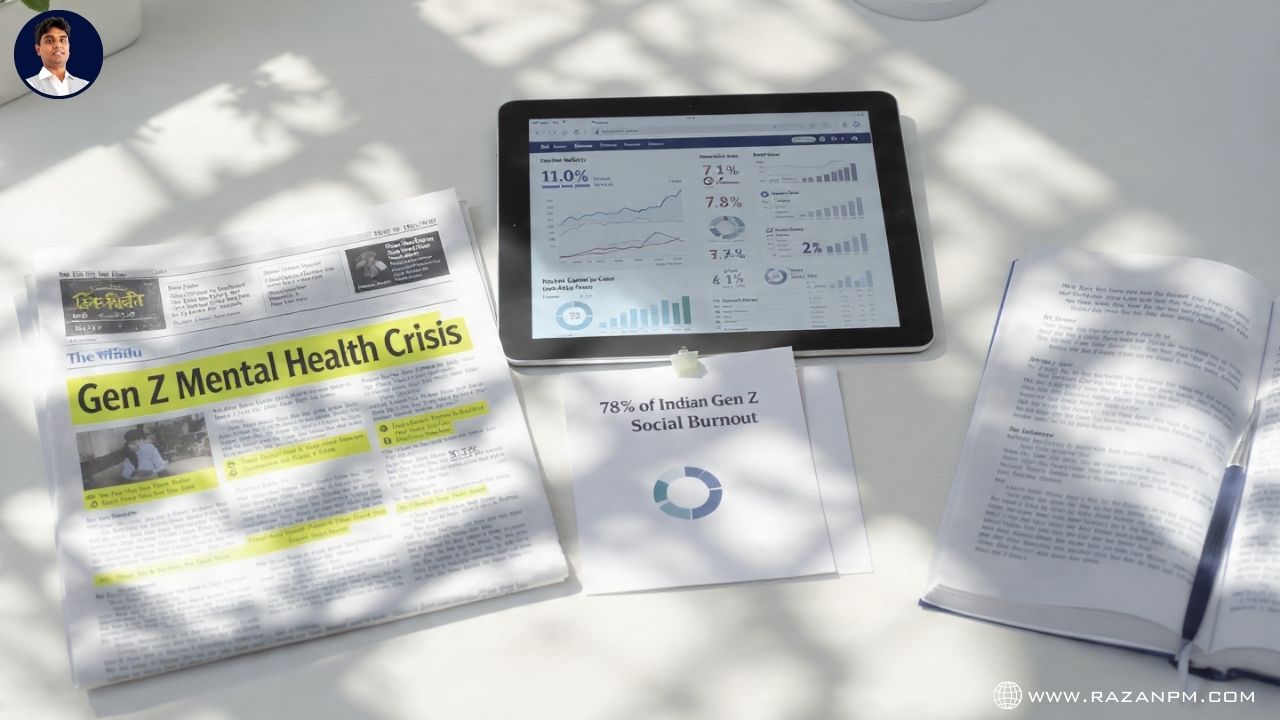
Modern studies support this rapidly rising emotional exhaustion:
📌 American Psychological Association Study:
Gen Z reports the highest stress levels among all generations.
📌 Harvard Youth Mental Health Report:
Gen Z struggles more with performance pressure, especially online.
📌 Oxford Internet Institute Research:
Constant comparison culture leads to emotional fatigue and insecurity.
Gen Z feels “watched, judged, and pressured” more than millennials ever did.
This isn’t a trend.
It’s a mental health epidemic hiding behind aesthetic reels and curated feeds.
also read: how disorders like insomnia fueldepression?
Let me share something personal.
A 21-year-old client once told me,
“Ma’am, I’m so tired of being seen. I don’t want to be perfect anymore.”
I asked a simple question:
“When was the last time you showed your real self to someone?”
She paused… and tears rolled down.
“I don’t even know who the real me is anymore.”
We began working together — gently peeling layers of expectations placed on her by society, family, and social platforms.
After months of healing, one day she smiled and said,
“I finally feel like I can breathe.”
And that’s when I realized —
Gen Z doesn’t need motivation.
They need permission to be human.
also read: how isolation triggers illness anddepression together?
Here’s a simple but powerful technique I give my young clients:
The “Unmasking Pause” Technique
Use it anytime you feel overwhelmed.
Step 1: Pause for 30 seconds
Close your eyes. Stop scrolling. Stop thinking.
Step 2: Hand on heart
Place your palm on your chest. Feel your breath.
Step 3: Say this silently
“I am allowed to rest. I don’t have to be perfect right now.”
Step 4: Deep breath
Inhale for 4 seconds
Hold for 2
Exhale for 6
Step 5: Identify the mask you're wearing
Ask yourself:
“Am I acting for others or living for myself?”
This tiny pause resets your emotional system instantly.
It’s like giving your mind a mini vacation.
also read: how to stop the cycle of pain anddepression?

But truthfully…
This is just the beginning.
Real healing requires:
✔ Rewiring belief systems
✔ Learning emotional boundaries
✔ Undoing comparison cycles
✔ Rebuilding identity beyond expectations
✔ Practicing nervous system regulation
✔ Addressing unresolved trauma
✔ Personalized strategies based on your psychological pattern
Yeh sab blog me possible nahi hota.
It requires guided, personalized steps — step-by-step healing based on your unique emotional blueprint.
also read: why anxiety turns into constantmuscle tension?
If this blog felt familiar…
If you felt seen…
If even a small part of you whispered, “This is me,”
then please remember:
You don’t have to figure this out alone.
As a Govt.Recognized Counsellor & Mind Healer, I’m here to support you with warmth, science, and non-judgmental understanding.
If you feel ready,
Book your 1:1 consultation here — and let’s gently walk toward healing together.
👉 Begin Your Journey with a 1 on 1 Consultation
👉 Begin Your Journey with a 1 on 1 Consultation

Q1. Why is Gen Z getting socially exhausted so easily?
Gen Z lives under constant visibility — social media, academic pressure, work demands, and family expectations. Yeh generation har waqt “being perceived” feel karti hai, which leads to emotional fatigue and anxiety.
also read: what to do when i love you gets noreply?
Q2. Is social exhaustion the same as burnout?
Not exactly. Social exhaustion is mental tiredness from constant interaction and expectations, while burnout is a deeper emotional, physical, and psychological collapse. But yes, social exhaustion can slowly lead to burnout.
also read: how fear of rejection kills realconnection?
Q3. How do I know if I’m facing social pressure burnout?
Common signs include overthinking, low social battery, fear of judgment, guilt while resting, emotional numbness, and avoiding calls or messages. Agar yeh baar baar ho raha hai, it needs attention.
also read: why timing turns simple talks intobig arguments?
Q4. Why does Gen Z overthink small things so much?
Gen Z grew up with digital comparison, instant feedback, online judgment, and performance pressure. Their brains are overstimulated, making even small interactions feel heavy.
also read: how everyday pressure breaks yourmind?
Q5. Is it normal to feel mentally tired without doing much?
Yes. Mental exhaustion doesn’t need physical activity — emotional pressure, constant notifications, and unspoken expectations are enough to drain your mind.
also read: do voice notes kill realconversations?
Q6. Does social media worsen Gen Z’s mental health?
For many, yes. Comparison, fear of being judged, curated perfection, and pressure to stay “updated” increase anxiety and social exhaustion.
also read: how bias turns into deep depression?
Q7. How can Gen Z reduce social pressure daily?
Start with small steps — boundaries with phone usage, mindful breaks, unmasking pause techniques, journaling, and limiting emotional labor. Professional guidance is helpful for deeper healing.
also read: how to tell if emotional separationhas already started?
Q8. When should someone seek professional help?
If exhaustion begins affecting sleep, focus, relationships, mood, or self-worth — it’s the right time to talk to a psychologist. Early help prevents burnout.
also read: how fear of sickness is making youunwell?
Q9. Can social exhaustion lead to anxiety or depression?
Yes. Chronic pressure can trigger Generalized Anxiety Disorder, Social Anxiety, or depressive symptoms if not addressed in time.
also read: why your partner cant read yourmind?
Q10. Can a psychologist help with Gen Z emotional exhaustion?
Absolutely. Therapy helps identify root causes, heal emotional pressure, set boundaries, and rebuild mental resilience. It's a safe space to breathe freely again.
also read: why gen z couples regret moving intoo soon?